

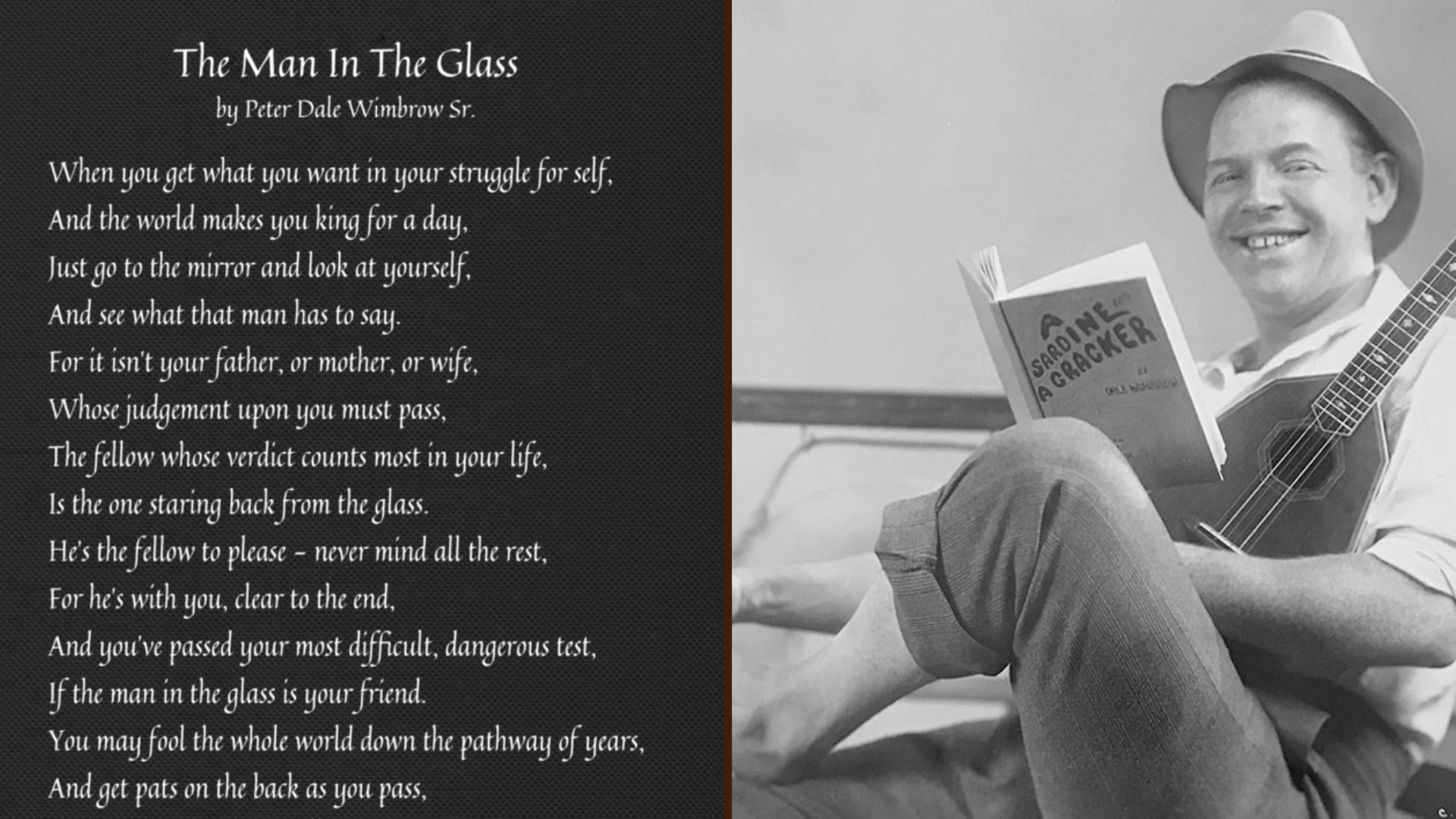
Have you ever done something you knew was wrong, gotten away with it, and still felt terrible afterward? That quiet discomfort is exactly what the Man in the Glass poem talks about.
Written back in 1934, it has quietly followed people through speeches, classrooms, and hard personal moments ever since, often without anyone knowing who actually wrote it.
In this post, we will walk through its history, its real author, what it means, and where the different versions came from.
What is the Man in the Glass Poem?

The Man in the Glass is a poem written by Dale Wimbrow in 1934. It says one thing clearly. The only person who truly judges you is the one looking back at you in the mirror.
You can fool the whole world and collect praise from everyone around you. But if you cheat or hurt others to get there, the man in the glass knows the truth.
The poem teaches self respect over public approval. What matters most is how you feel about yourself when no one else is watching. That quiet moment shows your real character.
This poem is often shared in schools and workplaces to teach an honest lesson. Live in a way that makes you proud when you face your own reflection.
Man in the Glass Poem (Full Text)
This section explains why the complete poem cannot be reprinted here and where readers can find a verified full text instead.
The poem still sits under copyright rules in some regions, so reproducing the entire text word for word is not something we can do here.
What we can do is walk through its structure, its message, and its most quoted lines, so you get a clear sense of what the poem says and why it matters. If you want the exact wording, we point you toward trusted sources further down.
Who Wrote the Man in the Glass Poem?
This section identifies the poem's author, addresses common confusion around authorship, and covers his personal background.
Dale Wimbrow and The Guy in the Glass
The poem was written by Dale Wimbrow in 1934. He first titled it "The Guy in the Glass." Wimbrow was a writer, musician, and radio personality who wrote the piece as a personal reflection on honesty and self-judgment.
Over time, the title shifted, and the poem picked up a wider audience than Wimbrow could have predicted during his own lifetime.
Why the Poem Is Often Credited to "Anonymous"
Many printed copies and online posts list the poem as anonymous. Some poetry sites even attach a placeholder name like "Anonymous Americas" instead of Wimbrow's own.
This happened because the poem spread by word of mouth, in speeches, in newsletters, and in motivational talks, often without a byline attached.
As it moved from person to person, the original credit got lost along the way. This is a common fate for older poems that travel faster than their attribution does.
Peter Dale Wimbrow and His Legacy
Dale Wimbrow's full name was Peter Dale Wimbrow. Beyond this poem, he worked in radio and wrote songs during a period when broadcast media was still young.
His family and later researchers worked to restore his name to the poem after decades of it circulating without credit.
Today, his authorship is documented and accepted by most literary and historical sources.
History of the Man in the Glass Poem
This section traces the poem's original publication date and explains how it evolved into today's popular versions.
The Original 1934 Publication
Wimbrow wrote the poem in 1934, reportedly after leaving a business meeting where he felt others had compromised their honesty.
The original version appeared in print that same year under his name and the original title. From there, it began a slow spread through personal collections, speeches, and printed keepsakes.
How The Guy in the Glass Became The Man in the Glass
Over the following decades, people quoting or reprinting the poem started changing "Guy" to "Man." This shift likely happened informally, as people recited it from memory or retyped it for newsletters and speeches.
The new title stuck, and it is now the more common name used today, even though it was not the original one.
Why Multiple Versions Exist Today
Because the poem passed through so many hands before the internet made exact copies easy to preserve, small wording changes crept in. Some versions rearrange lines.
Others swap a word here or there, like the archaic word "pelf" standing in for "self" in the opening line of one reprinted copy. None of this was intentional forgery.
It is simply what happens to a piece of writing that gets copied by hand and memory for generations before anyone checks it against the original.
Part of that spread happened inside families. Parents gave their children handwritten or printed copies, sometimes on cardboard, and had them memorize it, the same way a favorite hymn or family saying gets passed down.
That kind of quiet, personal circulation, more than any official reprint, is why so many versions exist today.
Man in the Glass Poem Meaning
This section breaks down the poem's central message about honesty, self-respect, and looking past outside approval.
The Mirror as a Symbol of Self-Honesty
The poem uses the mirror as a stand-in for conscience. It suggests that outside opinions do not matter nearly as much as what you see and know about yourself. You can fool a crowd, a judge, or the public record, but the reflection looking back at you knows the truth.
That image is simple, but it lands hard because most people recognize the feeling it describes.
The Message About Integrity and Character
At its core, the poem argues that character is tested in private, not in public. Praise from others feels good, but it means little if you know you cut corners or acted against your own values to get it.
The poem asks readers to hold themselves to a standard that does not depend on applause.
Why the Poem Still Feels Relevant
Even though it was written nearly a century ago, the poem speaks to something that has not changed. People still face pressure to choose approval over honesty. That pressure now shows up in likes, followers, and filtered photos as much as it once showed up in office politics.
That tension is timeless, which is part of why the poem keeps finding new readers in classrooms, workplaces, and recovery programs.
Man in the Glass Poem Analysis
This section examines the poem's themes, writing style, and the specific lines readers quote most often.
Themes of Self-Reflection and Accountability
The strongest theme running through the poem is personal accountability. It does not blame outside forces for a person's choices. Instead, it puts the responsibility squarely on the individual, asking them to answer to themselves first.
This makes the poem feel more like a private challenge than a public sermon. Edgar A. Guest's poem "Myself" carries a similar message and is sometimes read alongside it in classrooms and family settings.
Tone, Structure, and Literary Devices
The tone is direct and conversational, almost like someone speaking plainly to a friend. Wimbrow relied on simple rhyme and steady rhythm rather than complex poetic devices.
This plain style is part of why the poem reads easily and sticks in memory, since it sounds more like spoken advice than formal verse.
Memorable Lines and Their Meaning
Certain lines from the poem get quoted far more than others, especially the ones contrasting public praise with private guilt. Readers tend to remember the closing thought most, since it sums up the entire argument in a short, sharp statement.
We avoid quoting these directly here out of respect for copyright, but summaries of their meaning appear throughout this piece.
Original vs. Popular Versions of the Man in the Glass Poem
This section compares different published versions of the poem and explains which one is closest to the original.
| Aspect | Details |
| Stanza Count | Versions exist with four or five stanzas. Readers and commenters on poetry sites still debate which count Wimbrow intended, since both circulate widely. |
| Wording Differences | Small word and line changes appear between older and newer copies, including at least one version that swaps "self" for the older word "pelf." These shifts matter for tracing the poem to its source. |
| Closest to Original | The 1934 printed version, backed by researchers and family records, is closest to Wimbrow's actual writing. Most reprints come from later, altered copies. |
| Recommended Source | Look for sources citing the original 1934 publication directly for the most authoritative version. |
Where to Find the Man in the Glass Poem
This section points readers toward reliable places to read the poem and clarifies its current copyright standing.
Official and Archival Sources
Libraries, poetry archives, and historical newsletters from the mid-20th century are the most reliable places to check the poem's original wording.
Some family-maintained archives also preserve records connected to Wimbrow directly, which can help confirm which version is authentic.
Man in the Glass Poem PDF and Printable Versions
Many websites offer downloadable or printable copies of the poem.
When choosing one, it helps to check whether the source credits Wimbrow by name, since sites that label it anonymous, or credit a placeholder name, are more likely working from a secondhand or altered copy.
Copyright and Public Domain Explained
Copyright status can be confusing for older works like this one. Depending on renewal records and jurisdiction, the poem may or may not be fully in the public domain.
Because of this uncertainty, it is worth checking with a licensed source or legal reference before reprinting the poem in full for commercial use.
Why the Man in the Glass Poem Became So Popular
This poem spread through speeches, recovery programs, sports locker rooms, and classrooms because its message is short, clear, and personal.
It also spread quietly through families, passed from parent to child as a printed keepsake or a piece committed to memory long before it ever reached the internet.
It does not require background knowledge or context to understand. Anyone who has ever felt the gap between what they showed the world and what they knew privately can relate to it instantly.
That instant recognition, more than any single event, is what carried the poem from a small 1934 printing into a piece that people still quote today.
About the Author: Dale Wimbrow

Peter Dale Wimbrow lived a working life in radio and writing during a period when both fields were still finding their shape.
Outside of this poem, his output included songs and broadcast work that reflected the entertainment style of his era.
Though his name faded from public memory for a while, later research restored proper credit to him, and he is now recognized as the clear author behind one of the most quoted pieces of personal reflection in modern use.
Conclusion
So here's my honest take: the first time I read the Man in the Glass poem, I skimmed past it. The second time, years later, it actually stopped me.
That's the strange thing about this poem. It waits for the right moment to matter to you. Maybe that moment is now, after a long day, or a hard choice. Read it slowly. Let the mirror ask its question.
Then tell me in the comments what it brought up for you, and pass this along to someone who might need it today.
Frequently Asked Questions
Is the Man in the Glass poem religious in nature?
No formal religious language appears in the poem. Its message about honesty and self-judgment works across belief systems, which is likely why it appeals to such a wide audience.
Who is the poem written from, and who is it speaking to?
The poem is written in first person, addressed to the reader directly. It reads like private advice, almost as if the writer is speaking to himself in the mirror.
Has the Man in the Glass poem been turned into a song or used in a movie?
Yes, various speakers, coaches, and public figures have quoted or referenced it in speeches and media. Some musical adaptations exist, though none carry official ties to Wimbrow.
How long is the Man in the Glass poem?
The poem is fairly short, running about four to five stanzas depending on the version. Most readers can get through it in under two minutes.