


I still remember the exact moment I looked up my birthday and found my line in the Day of the Week poem.
It was oddly accurate, and I could not explain why. That small moment sent me down a rabbit hole I did not expect.
After years of studying poetry and folklore traditions, I started digging into where this rhyme actually came from, what each line truly means, and why millions of people still search for it today.
What I found was far more interesting than a simple nursery rhyme.
There is history, astrology, and symbolism packed into eight short lines. Stick with me, because this one genuinely surprised me.
What Is the Day of the Week Poem?
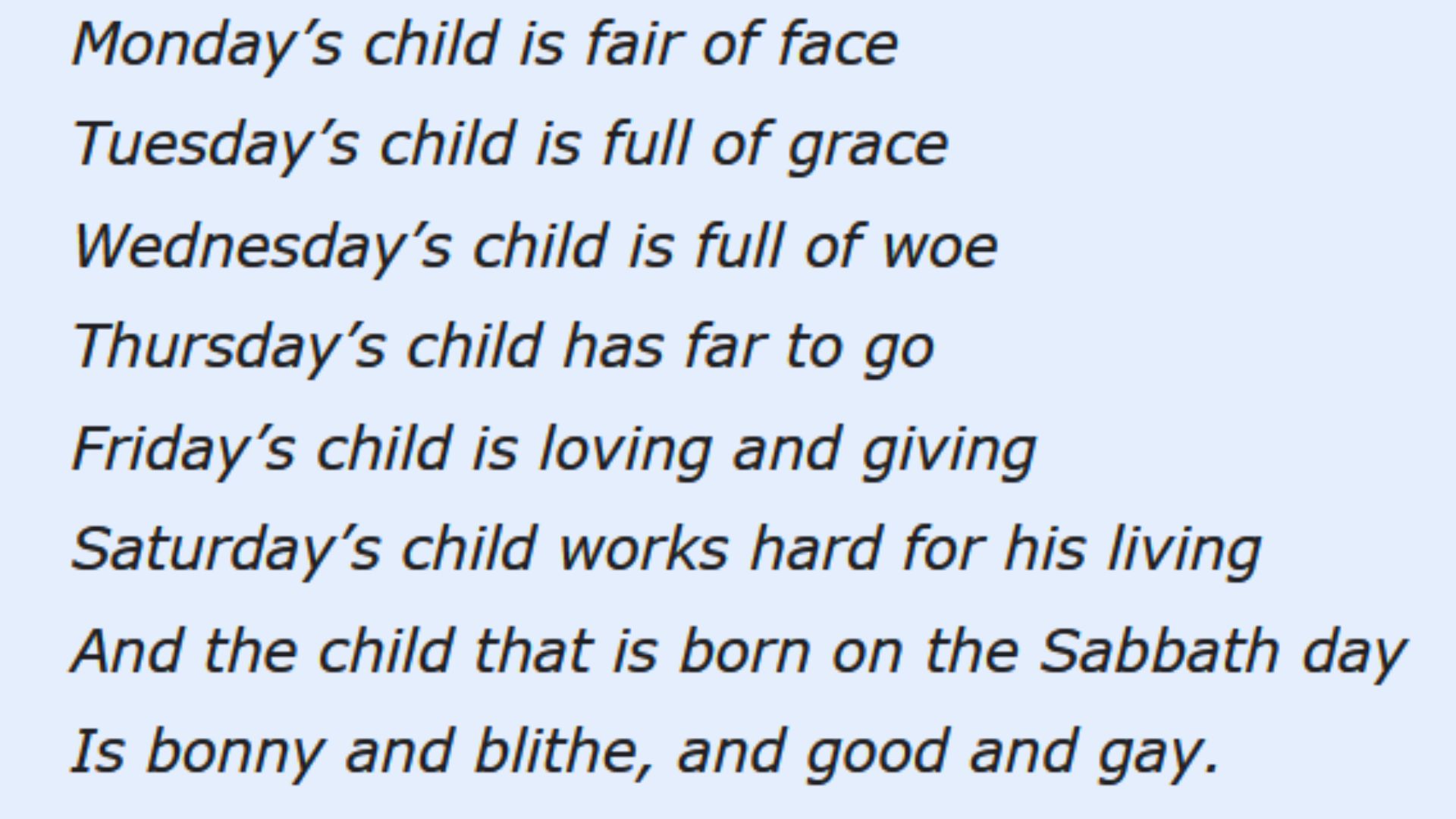
The Day of the Week poem is a traditional English nursery rhyme that assigns a personality trait to a child based on the day they were born.
Each day gets its own line with a specific characteristic attached.
It has been passed down through generations and stays popular in parenting culture, birthday traditions, and childhood literature. Many parents still look it up the day their child is born.
Most people know it as Monday's Child, though a few other names exist depending on the version. The wording shifts slightly across eras and regions, but the structure stays the same.
Full Text of the Monday's Child Poem
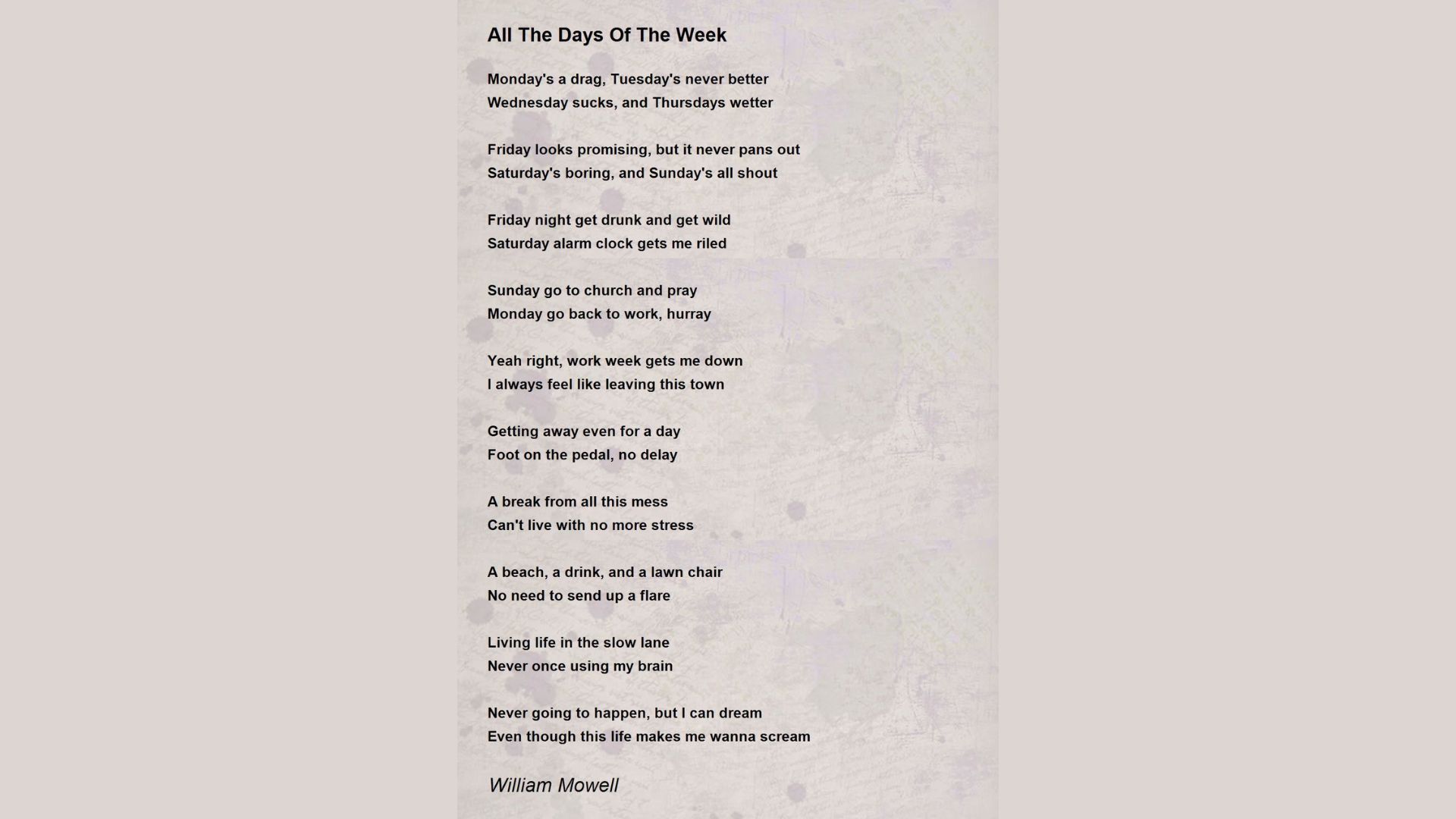
Here is the traditional version of the Day of the Week poem as it has been printed and shared for generations.
Traditional Version
Monday's child is fair of face, Tuesday's child is full of grace, Wednesday's child is full of woe, Thursday's child has far to go, Friday's child is loving and giving, Saturday's child works hard for a living, But the child born on the Sabbath day, Is bonny and blithe and good and gay.
Modern Variations of the Poem
Some versions swap traits between Wednesday and Thursday, and the Sunday verse changes most noticeably. Words like "bonny" and "gay" carried their original meanings of healthy and cheerful, but modern versions sometimes update the language for clarity.
These small differences do not change the heart of the poem. It remains a warm, playful way to connect birth days with personality no matter which version you grew up reading.
Meaning Behind Each Day in the Poem
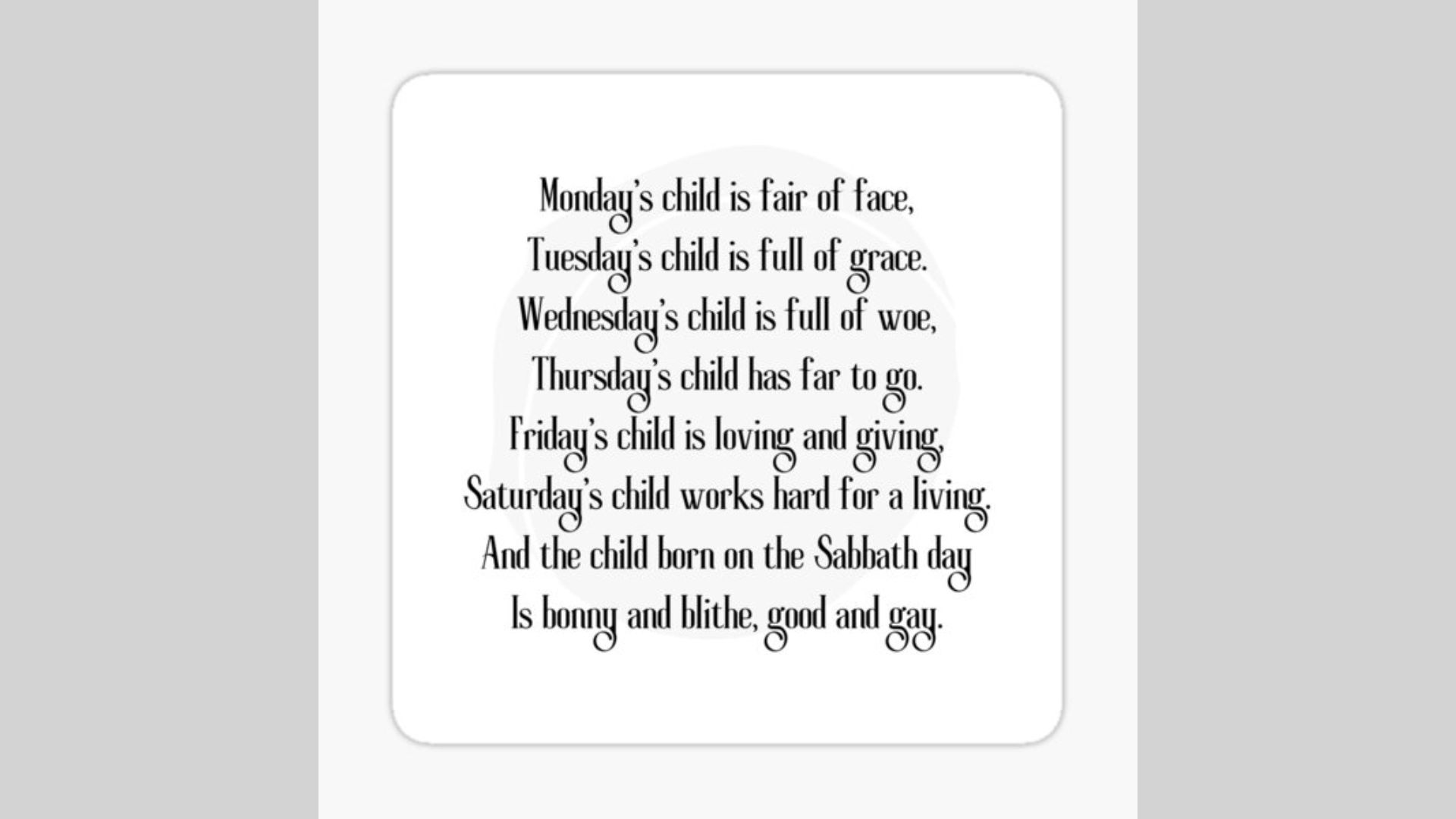
Every line carries its own symbolism. Here is what each day is really saying about the child born on it.
Monday's Child Is Fair of Face
Fair of face traditionally meant physical beauty, but the broader reading goes beyond looks. In older English, fairness also meant brightness and a kind of warmth that draws people in.
Today most readers take this to mean charm and natural likability. It is a positive opening line that sets an optimistic tone for the whole poem.
Tuesday's Child Is Full of Grace
Grace here means more than elegant movement. It covers kindness, good manners, and a natural ease with people.
In modern readings, this line connects closely to emotional intelligence and social warmth. Being full of grace is one of the most quietly powerful things a person can be.
Wednesday's Child Is Full of Woe
This is the line people remember most, usually because it sounds dramatic compared to the others. Full of woe suggests sadness or a life touched by struggle.
Modern interpretations are kinder. Many now read this as emotional depth and sensitivity rather than a prediction of unhappiness. People who feel things deeply often connect with others most meaningfully.
Thursday's Child Has Far to Go
This line is about ambition and a life full of movement. Thursday children are seen as people with a long road ahead and the drive to walk it.
Most modern readings lean positive, seeing Thursday children as natural forward-thinkers who will not settle early. The journey is long, but it leads somewhere worth reaching.
Friday's Child Is Loving and Giving
This is the warmest line in the poem. Loving and giving describes genuine compassion and a natural instinct to put others first.
Friday's connection to Venus, the planet linked to love in old astrological tradition, likely influenced this line. Friday children are seen as loyal, generous, and naturally caring.
Saturday's Child Works Hard for a Living
Saturday's child does not get magic or beauty. They get work ethic, which in many ways is the most grounded gift of all.
This line speaks to persistence and discipline. Historically, Saturday was linked to Saturn, a planet associated with structure and hard work in old folklore, which explains this particular pairing.
Sunday's Child Is Bonny and Blithe
Sunday's child gets the most joyful description of all. Bonny means healthy and attractive, blithe means carefree and cheerful, and good and gay in its original sense means full of goodness and happiness.
Being born on the Sabbath was considered especially lucky in old English tradition. Today this line is read as natural positivity and good fortune, a lightness that others notice and are drawn to.
Origins and History of the Day of the Week Poem
The Day of the Week poem has its roots in English folklore and the oral tradition of nursery rhymes passed down long before anything was written. These rhymes were a simple way to teach children about personality and the world around them.
The earliest known printed version appeared in a collection called Traditions of Devonshire, published in 1838. The rhyme was almost certainly in circulation much earlier, shared between families through storytelling.
Old astrological beliefs likely shaped the poem too. Each day carries a traditional planetary link: Monday for the Moon, Friday for Venus, Saturday for Saturn. Those planet-to-personality connections probably influenced which traits landed on which days.
As English books and oral traditions spread globally, this poem travelled with them and found its way into homes, classrooms, and parenting guides worldwide.
Why the Monday's Child Poem Is Still Popular Today
Nostalgia plays a big role. Many adults grew up hearing this poem and look it up again the moment they have a child of their own. It feels like something worth passing on.
Social media has given it a second life too. Birthday posts and baby announcements regularly feature the relevant line as a personal and shareable touch.
Baby shower prints, nursery wall art, and parenting blogs keep it visible for new parents discovering it fresh. And the broader human love of personality-based traditions, birth months, star signs, and similar frameworks keeps people coming back to it naturally.
Is the Day of the Week Poem Accurate?
No, and it was never meant to be. The Day of the Week poem is folklore, not a framework for predicting personality or life outcomes.
The traits are broad enough that most people find something to connect with regardless of their birth day. That flexibility is part of why it has lasted so long.
Think of it like a horoscope or a birthday personality guide. It is meant to be fun, a little thought-provoking, and more interesting than it has any right to be.
Conclusion
The Day of the Week poem has a way of sticking with you long after you first read it.
I have seen people share their line with friends, debate whether it fits, and pass it on to their own children years later.
That is the quiet power of a rhyme that has survived centuries. Now it is your turn. Look up the day you were born, find your line, and drop it in the comments below.
Does it match your personality? I read every response and I genuinely want to hear what you think.
Frequently Asked Questions
What Is the Full Monday's Child Poem?
The Monday's Child poem assigns a personality trait to each day of the week, starting with "Monday's child is fair of face" and ending with Sunday's child described as bonny and blithe. It is a traditional English nursery rhyme with roots in 19th century folklore.
What Does "Wednesday's Child Is Full of Woe" Mean?
In simple terms, it suggests a Wednesday child may experience more emotional depth or sensitivity in life. Most modern readers interpret this as empathy and feeling deeply rather than a prediction of sadness.
Who Wrote the Day of the Week Poem?
The original author is unknown and the poem is considered part of traditional English folklore. Its earliest printed appearance was in 1838, but it was likely shared orally long before that.
Are There Different Versions of the Monday's Child Rhyme?
Yes, several versions exist with small wording changes across cultures and time periods. The core structure stays consistent, but certain lines, particularly Sunday's, are sometimes updated for modern readers.
Is the Monday's Child Poem Based on Astrology?
There is a likely connection to old astrological traditions that linked each Day of the Week to a specific planet with its own personality qualities. Those associations probably shaped the traits assigned to each day in the rhyme.