

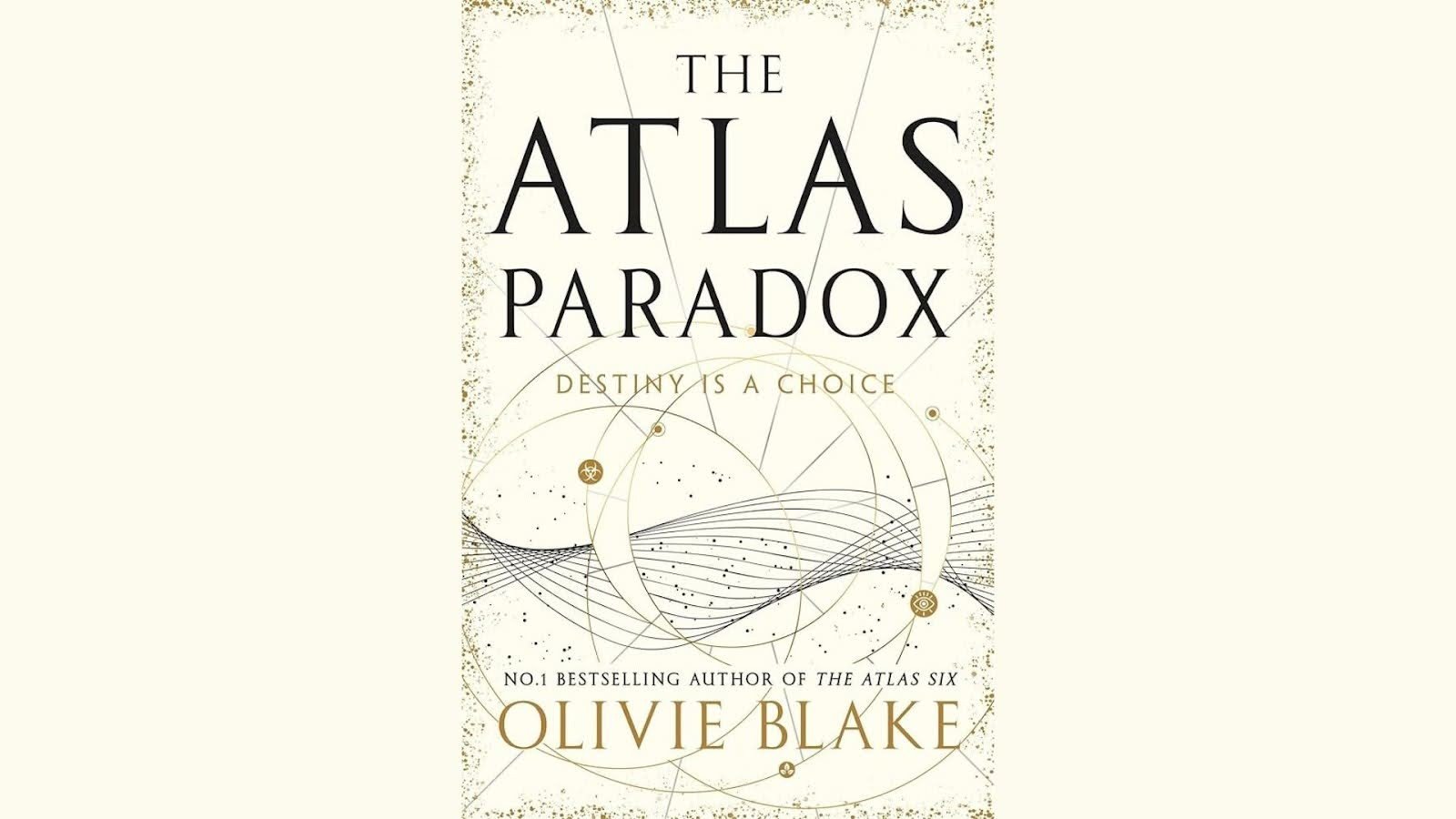
The Atlas Paradox by Olivie Blake went viral with good reason, but it is a read that is complex. There do exist six main characters, and there are twisted timelines with deep moral choices present, so missing details from the first book may occur. You will be lost if details from the first book are missed.
I have read through the series three times now, and I tracked each character arc and each timeline shift so that I could highlight all of the key relationships and plot points you need.
This summary explains character motivation, including book one’s important context, in a clear way. The summary also clarifies those timeline events and cuts through all of the confusion. The relationships that serve to drive the story will provide perception along with clarity for the tricky timeline jumps, plus a full breakdown of all six main characters.
Essential Series Information
The Atlas Paradox is the second book in Olivie Blake’s trilogy. Olivie Blake is actually a pen name for Alexene Farol Follmuth, who writes in many different types of books. This story came out in 2022 and picks up right where The Atlas Six ended.
The book’s success story is pretty amazing. It started as a self-published Kindle book that readers shared everywhere online. The buzz got so big that Tor Books decided to republish it officially. Now Amazon Studios is turning it into a TV series.
You need to read these books in order. The Atlas Six comes first, then The Atlas Paradox, and finally The Atlas Complex. Skip the first book, and you’ll be completely lost about what’s happening.
Quick Plot Foundation
The story starts immediately after the first book ends. Libby Rhodes has been kidnapped and is missing. The other five initiates have to continue their second year of training without her.
But here’s the twist: Libby isn’t just missing. She’s been sent 30 years into the past to 1989. While her friends deal with problems in the present, she’s fighting to survive and get back to her own time.
The story jumps between two main places. You’ll see the Alexandrian Society headquarters, where the five remaining students are. Then you’ll see 198,9 where Libby is trapped and trying to find a way home.
The Abduction Mystery Revealed
Libby’s kidnapper isn’t some random bad guy. Ezra is actually her ex-boyfriend, whom she thought she could trust. But Ezra has been lying about who he really is this whole time.
Ezra used to be part of the Society years ago. He was friends with Atlas Blakely, who runs the Society now. They even made plans together to destroy the whole organization from the inside.
But Atlas changed his mind and started making his own secret plans instead. This made Ezra angry, so he decided to work with other enemies of the Society. Taking Libby was just the first step in his plan to tear everything down.
Character Transformation Arcs
Libby Rhodes’ Moral Decline
Libby used to be the good one in the group. Everyone saw her as the person with the strongest morals. She always tried to do the right thing, even when it was hard.
Being trapped in 1989 changes her completely. She has to do whatever it takes to survive. This means giving up her morals and becoming someone she never thought she’d be.
The only person who helps Libby in 1989 is Belen. They become close friends because Belen is kind to her. But when Libby finally gets back to her own time, she betrays Belen in the worst way possible. She even causes a nuclear explosion that hurts many people.
Remaining Initiates’ Development
The five students left behind have their own problems to deal with. They have to keep studying and learning while forming partnerships with each other. But these partnerships don’t last long because everyone has their own secret goals.
Nico really wants the group to become closer friends. He hopes they can trust each other and work together better. But the others don’t care about friendship the same way he does.
Most of the students are happy to work together only when it helps them personally. Once their second year ends, they’re fine with letting these partnerships fade away. This makes Nico sad, but he can’t change how they feels.
The Psychological Game Element
Every student has to play a special kind of game during their training. These games happen in a place called the astral plane, where they can meet and talk to each other in their minds. It’s not the real world, but it feels real to them.
The purpose of these games is to show what each person is really like inside. It reveals their fears, insecurities, and how they see themselves. This information becomes very important later in the story.
Atlas Blakely and other Society leaders watch these games closely. They use what they learn to understand each student better. This helps them predict what the students might do next, which gives the Society more control over them.
Professional Review Highlights
Most professional reviewers gave The Atlas Paradox about 4 stars out of 5. They praised the writing style for being thoughtful and emotional. The author does a good job of making you feel what the characters are feeling.
The book focuses heavily on character development rather than fast-paced action. Each chapter switches between different characters’ points of view. This lets you understand what everyone is thinking and feeling throughout the story.
Critics noted that the pacing is slower than in the first book. Instead of rushing through plot points, the author takes time to show how the characters change and grow. Some readers love this approach, while others want more action.
Strengths Identified by Critics
Emotional Depth
The writing quality really stands out in this book. The author has a gift for making you feel exactly what she wants you to feel. When a character is sad, you feel sad. When they’re angry, you feel that anger too.
The story uses a lot of internal dialogue to move the plot forward. Instead of just showing what characters do, you get to see what they’re thinking about. This makes the characters feel more real and human.
The moral complexity is another strong point. The author doesn’t make anyone completely good or completely bad. Even the villains have reasons for their actions that make sense. This makes the story more interesting because you’re not sure who to root for.
World-Building Expansion
The world feels much bigger in this second book. You learn about the Forum and other groups that oppose the Society. This shows that the Society isn’t the only magical organization out there.
The magic system mixes science, philosophy, and fantasy in unique ways. When characters team up, their abilities work together in new and interesting ways. This keeps the magic fresh and surprising throughout the story.
The universe continues to blend sci-fi and fantasy elements in ways you don’t see in other books. It’s not just magic or just science – it’s both working together in ways that feel believable within the story world.
Reader Experience Factors
Engagement Elements
Many reviewers said they couldn’t put the book down once they started reading. The story pulls you in and makes you want to know what happens next. Even though the pacing is slower, the emotional investment keeps you turning pages.
Readers develop strong connections to the character outcomes. You start caring about what happens to each person. This emotional investment makes the reading experience more intense and memorable.
The book ends in a way that makes you excited for the final book in the trilogy. It answers some questions but raises new ones. Most readers immediately want to know how everything will end.
Potential Challenges
The timeline can be confusing because events happen in different years. Keeping track of when things occur relative to each other takes some effort. You might need to pay extra attention to avoid getting lost.
Many moving storylines don’t come together until near the end. Some readers find this frustrating because they want to see how everything connects. The payoff comes later, but you have to be patient.
Some plot threads feel separate from the main story. While they’re all connected eventually, it’s not always clear how they fit together. This can make parts of the book feel slow or unnecessary until you see the bigger picture.
Conclusion
Now you have the atlas paradox summary that is needed to fully comprehend this detailed narrative. The character arcs, along with Libby’s time travel situation, in addition to the reasons behind the choices, are known.
Timelines will be more understandable, and character motivations will be much clearer. Readers will find less confusion from that. Ready for your appreciation are the moral complexity and relationship dynamics that make this book special.
What I’ve walked you through are the essential grounds of multiple readings and careful analysis. Decide as to whether this trilogy matches up with your interests, or read through the final book at this time.
Found this summary helpful? Give it to readers who battle with these questions, too. About which character transformation were you most surprised? Share your favorite thing in a comment below.
Frequently Asked Questions
What is The Atlas Paradox about?
The Atlas Paradox is the second book in Olivie Blake’s trilogy. Libby Rhodes gets trapped 30 years in the past by her ex-boyfriend Ezra, while the five remaining initiates continue their magical training. The story follows both timelines as characters face moral challenges and hidden agendas.
Do I need to read The Atlas Six first?
Yes, you absolutely need to read The Atlas Six first. The Atlas Paradox picks up immediately after the first book ends. Without understanding the characters, their relationships, and the initial setup, you’ll be completely lost in the sequel.
Why is The Atlas Paradox confusing to readers?
The book has six main characters with individual story arcs, multiple timelines including time travel, and complex moral choices. Characters switch between past and present, making it hard to track when events happen and how they connect.
What makes this atlas paradox summary essential?
This summary breaks down character motivations, explains timeline jumps, and clarifies key relationships. It helps you understand why characters make certain choices and how past events affect present actions, making your reading experience much clearer and more enjoyable.
Is The Atlas Paradox worth reading?
If you enjoy character-driven fantasy with moral complexity, yes. Critics gave it 4-star ratings for emotional depth and world-building. However, it’s slower-paced than typical fantasy novels and focuses more on character development than action sequences.