

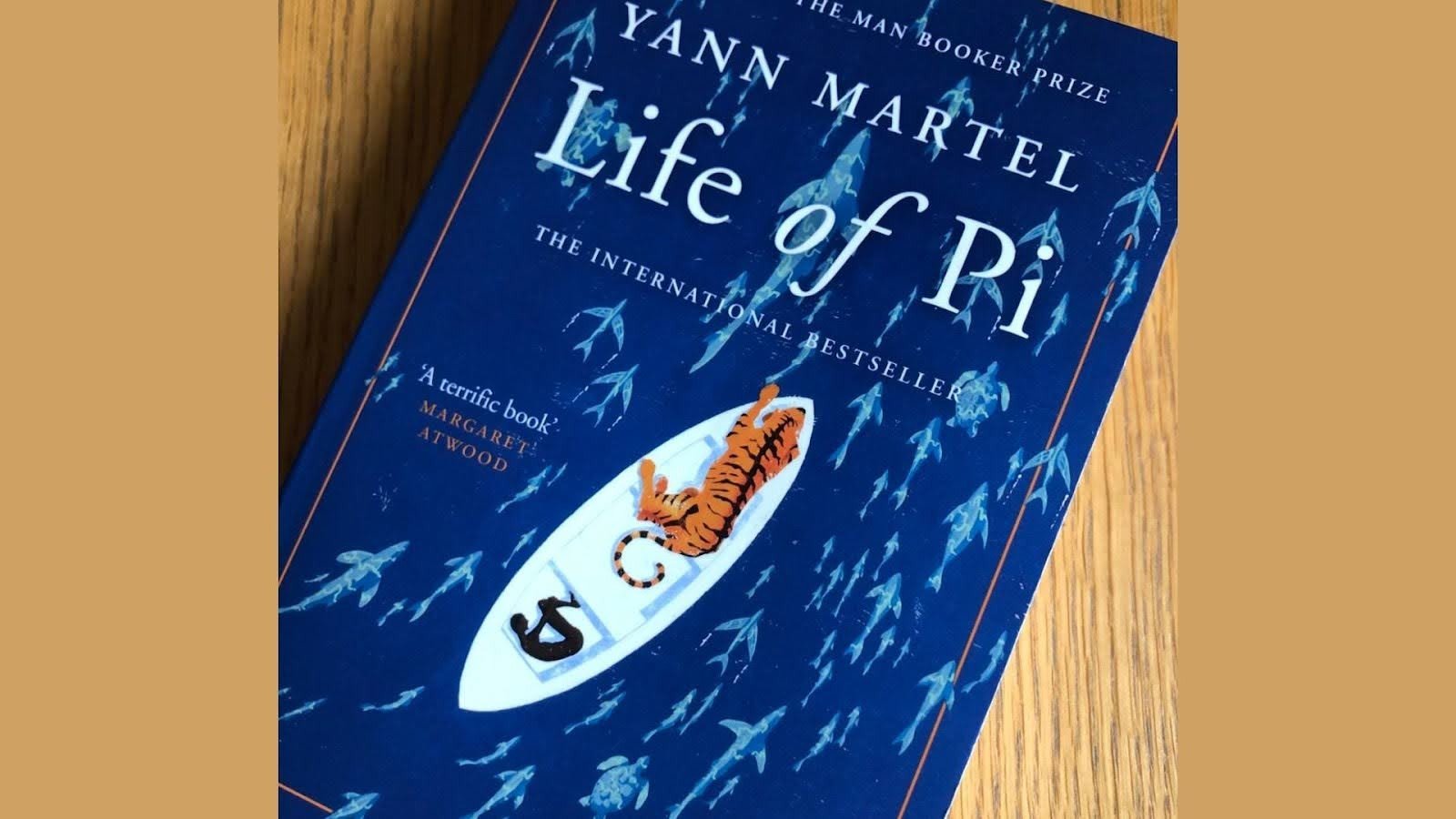
The article is based on, idea of being stranded on a lifeboat in the middle of the ocean, with a 450-pound Bengal tiger. That’s an extraordinary situation for Pi Patel faces in Life of Pi. As a teenage boy from India, he must navigate hunger, fear, and helplessness.
But this isn’t just a survival story, Pi’s Story journeys deep into questions of faith, truth, religion, and the stories. We tell ourselves to make sense of unbelievable experiences, religious, scientific, and philosophical.
Yann Martel’s writing pulls you in with vivid details, emotional depth, and a twist of changes everything, long after finishing and completing the books. Pi’s journey stays with you, haunting and inspiring.
Life of Pi by Yann Martel: A Story That Defies Simple Categorization
The cover promises this book will make you believe in God. That’s not quite right.
What you’ll actually find is a story about a teenage boy from India who survives a shipwreck. He spends 227 days on a lifeboat with a Bengal tiger named Richard Parker. The setup sounds wild, almost impossible.
Yann Martel won the Man Booker Prize in 2001 for this novel. Critics called it fantasy, magical realism, and a spiritual tale. But those labels miss what Life of Pi really does. This isn’t just survival fiction with religious themes sprinkled on top. It’s something darker and more complicated.
Deep review Analysis
This section goes deeper into how Martel creates his effects. We’ll look at writing style, pacing choices, and the religious framework that causes so much debate.
Understanding these elements helps explain why Life of Pi works despite its flaws. The book has real problems, but it also does things few novels attempt.
Yann Martel’s Writing Style: Bringing the Unbelievable to Life
Martel makes you feel every moment on that lifeboat. The sun burns. The salt water stings. Your body develops painful boils from constant exposure. You’re not just reading about survival, you’re experiencing it.
The zoological details ring true because Martel did his research. When Pi describes animal behavior, it sounds scientific and accurate. He explains how Richard Parker marks territory, how the tiger’s body language signals danger, and what a tiger needs to stay alive. These details build trust with readers.
Physical suffering becomes real on the page. Pi eats raw turtle meat because he has no choice. He describes the taste, the texture, the act of breaking through the shell. Martel doesn’t look away from the ugly parts. The sensory details pile up until you feel like you’re starving, too.
Character Development Through Observation
Pi is smart, observant, and passionate. He notices everything around him: cloud formations, fish species, and the exact way Richard Parker yawns. This creates what one reader called “putting on the Pi suit.” You see the world through sharper eyes.
The character feels real because his interests feel real. He loves learning about animals and religions with equal intensity. He gets excited about small discoveries even while dying of thirst. His personality comes through in every observation.
Here’s the trick: Martel makes you like Pi. You root for him. You want him to survive. Later, this creates problems when you have to reconsider everything. Can you still like someone after learning what they might have done? The book forces that question.
The Religious Framework: A Red Herring?
Before diving into Pi’s multi-faith practice, it’s worth asking what role religion really plays in his story.
Pi’s Multi-Faith Practice
Pi decides to practice Hinduism, Islam, and Christianity all at once. He finds beauty in each tradition. He prays in different ways throughout the day. When the religious leaders from each faith meet accidentally, they’re all shocked to learn they share this student.
His family doesn’t understand. Why does he need three religions? Why not pick one? Pi insists each offers something different. Each gives him a piece of truth. From the surface, this looks like a message about all religions being equally valid.
This Life of Pi book review questions whether that surface reading is correct. Pi might not be showing respect for all faiths. He might be collecting protective charms, gathering shields against something he fears in himself.
The Deeper Reading: Religion as Shield
What if Pi uses religion to protect himself from guilt rather than to reach God? What if his faith is less about belief and more about creating distance from his own nature?
The book calls religions “amulets.” That word choice matters. Amulets ward off evil. They’re objects of protection, not paths to truth. Pi might be using spiritual practices to keep his darker self at bay.
Once you know Pi is an unreliable narrator, everything becomes suspect. His religious stories might be just as constructed as his survival story. The “believe in God” premise that the book advertises starts to crack apart. Martel might be challenging faith rather than promoting it.
The Final Religious Twist
The book ends with a line: “And so it goes with God.” What does that mean? Readers argue about this constantly.
One reading: We choose to believe the beautiful story about God even without proof, just like we might choose to believe Pi’s tiger story. Faith means accepting the version that gives life meaning.
Another reading: God is just another pretty story we tell ourselves. Religion is no more “true” than Pi’s animal tale, but we believe it anyway because the alternative is too harsh. This interpretation is much darker.
Structural Analysis
The structure of Life of Pi matters as much as the content. Martel builds his story in layers, with frames inside frames. Understanding how he constructs the book helps explain why it affects readers so strongly.
The Power of the Twist (and Why It Works Despite Everything)
At a certain point, the story “gets out of hand.” Events become hard to believe. You might think: Did that really happen? Can any of this be true?
The twist comes from nowhere yet feels inevitable once it arrives. Your brain scrambles to process the new information. You flip back through earlier chapters, looking for clues you missed. The story settles into a new shape.
Most readers accept the twist even though it’s disturbing. Something about how Martel builds to that moment makes it feel earned rather than cheap. The groundwork was there all along, hidden in plain sight.
The Double Twist: Reframing Everything
Then comes the second twist. Pi tells an alternative version of events. The same basic story, but with humans instead of animals. Which version is real? Which is “truer”?
This reminds readers of “The Things They Carried” by Tim O’Brien, where factual truth and emotional truth are split apart. A story can be “false” in facts but “true” in meaning. Or a story can be factually accurate but miss the essential truth of an experience.
The book asks: Does it matter which version actually happened? Both stories contain the same core-survival through terrible choices. The details change, but the moral weight remains. You decide which story you prefer to believe.
The Italicized Framework: What Can We Trust?
Only the sections with adult Pi speaking (printed in italics) might be fully truthful. Everything else passes through the filter of his memory and trauma.
This means even the childhood stories become questionable. Was young Pi really that innocent? Did he actually practice three religions with pure intentions? Or is that part of the constructed narrative, too?
The implication chills you: Even before the shipwreck, Pi might have been telling himself comfortable stories. The trauma didn’t create his unreliability, it just made it necessary for survival.
Symbolism and Deeper Meanings
Every major element in Life of Pi works on multiple levels. The tiger, the lifeboat, and the zoo each carry symbolic weight beyond their literal meaning.
Richard Parker: More Than a Tiger
The tiger’s name comes from a clerical error. A hunter named Richard Parker caught the cub. Papers got mixed up, and the animal received the hunter’s name while the man got the animal’s original name. This switch matters symbolically.
Richard Parker might represent Pi’s survival instinct. Or his savage nature. Or the part of himself he fears. The alpha-prey relationship between Pi and the tiger mirrors an internal struggle. Keeping Richard Parker alive means keeping his own animal self controlled but present.
Some readers think the tiger is entirely symbolic, not a real animal on the boat at all. Others believe Richard Parker was real but also represents something deeper. The book supports both readings.
The Lifeboat as Microcosm
The lifeboat becomes a tiny world with its own rules. Social hierarchy matters. The strong survive. The weak die quickly. Cooperation and violence exist side by side.
This compressed reality strips away civilization’s comforts. What remains is raw human (and animal) nature under extreme pressure. Every choice matters. Every action has immediate consequences.
The lifeboat forces questions about what we owe each other when resources are scarce. About when violence becomes necessary. About where the line falls between survival and murder.
The Zoo as Metaphor
Early chapters discuss zoo philosophy at length. Pi’s father explains that wild animals don’t want freedom, they want territory and safety. “Animals don’t escape to somewhere but from something.” They run from danger, not toward opportunity.
This connects to the human condition. We think we want limitless freedom, but we actually need boundaries. Too much freedom creates anxiety. We need our cages, our routines, our defined territories.
The zoo metaphor runs through the entire book. Pi lives in a zoo (literally), then survives on a lifeboat (a different cage), then builds a life in Canada (another form of captivity). True freedom might be impossible or even undesirable.
Spoiler Analysis
Warning: This section reveals the book’s major plot twists. Stop here if you haven’t finished Life of Pi.
What Actually Happened
Pi was a boy who did terrible things under extreme pressure. He survived by becoming someone he couldn’t recognize. Years later, he’s a regretful man who built a beautiful story around his guilt.
The animal story preserves moral truth while hiding factual truth. It expresses what happened emotionally without forcing Pi to say the actual words. He can tell his story without speaking his shame out loud.
This Life of Pi book review sees the book as fundamentally about guilt’s power. Guilt doesn’t just make us feel bad, it rewrites our memories. It makes us create new narratives where we can live with ourselves. Pi’s story is a cocoon protecting him from what he knows he did.
Reinterpreting the Religious Elements
Pi’s relationship with religion looks different after the reveal. Maybe he uses faith to create distance from his actions. Maybe he doesn’t truly understand religion at all, he just needs its protective power.
His three-faith practice might show desperation rather than wisdom. He’s collecting every possible shield against his own depravity. He’ll try anything that might wash away the stain.
The religious sections that drag in the book’s first half might intentionally mirror Pi’s own confusion. He talks endlessly about God because he can’t face himself. Religion becomes noise covering silence.
Practical Reading Advice
Managing Expectations and Getting the Most from Your Reading
- Don’t expect a spiritual book: Life of Pi uses religion, but isn’t really about faith. Go in expecting psychological fiction.
- Prepare for graphic details: The survival sections describe killing, eating raw meat, and bodily suffering. It gets uncomfortable.
- The discomfort serves a purpose: Martel wants you to feel Pi’s experience. Don’t skip the hard parts.
- Pay attention to small details: Throwaway lines and minor scenes become important later. Nothing is wasted.
- Notice the frame story: The italicized sections with adult Pi matter. They’re the only “untainted” parts.
- Question everything Pi says: He’s an unreliable narrator from page one. Look for gaps in his story.
- The pacing issues are partly intentional: Slow sections create the feeling of endless time at sea.
- Read the author’s note carefully: The opening frames how to approach the whole book. Martel plants clues early.
- Discuss it after finishing: Life of Pi works best as a book club read. The debates about meaning enhance the experience.
Conclusion
Life of Pi earns its reputation through its central twist. Yann Martel’s detailed descriptions create total immersion. The beautiful writing and careful structure make this a memorable reading experience despite clear flaws.
The religious packaging misleads readers. The pacing stumbles in places. Some sections feel forced. But the book asks questions worth considering. It challenges how we understand truth, guilt, and the stories we tell ourselves.
This Life of Pi book review recommends the book to readers who enjoy psychological fiction and don’t mind ambiguity. If you need clear answers, Life of Pi will frustrate you. If you like books that spark debate and discussion, this delivers.
Frequently Asked Questions
Is Life of Pi based on a true story?
No, Life of Pi is a fiction written by Yann Martel. However, Martel was inspired by a 1981 book review that mentioned a man who survived months at sea. The novel uses this idea but creates an entirely original story with made-up characters and events.
What is the main message of Life of Pi?
The book explores how we create stories to cope with trauma and guilt. It questions whether emotional truth matters more than factual truth. Life of Pi asks readers to choose between a beautiful story and a harsh reality, suggesting our choice reveals our values.
Do I need to be religious to enjoy Life of Pi?
Not at all. Despite its religious themes, Life of Pi is really about psychology and survival. Many readers interpret the book as questioning faith rather than promoting it. The story works whether you’re religious, an atheist, or somewhere in between, with different meanings available.
What happens at the end of Life of Pi?
At the end, Pi tells an alternative version of his survival story with humans instead of animals. The book suggests one version might be fabricated to cope with terrible events. It leaves readers to decide which version is true and which story is “better.”
Is Life of Pi appropriate for teenagers?
The book contains graphic descriptions of violence, killing, and survival that may disturb younger readers. It deals with heavy themes like guilt and trauma. Most editions are marketed for readers aged fifteen and up. Parents should consider their teenager’s maturity level before recommending it.