

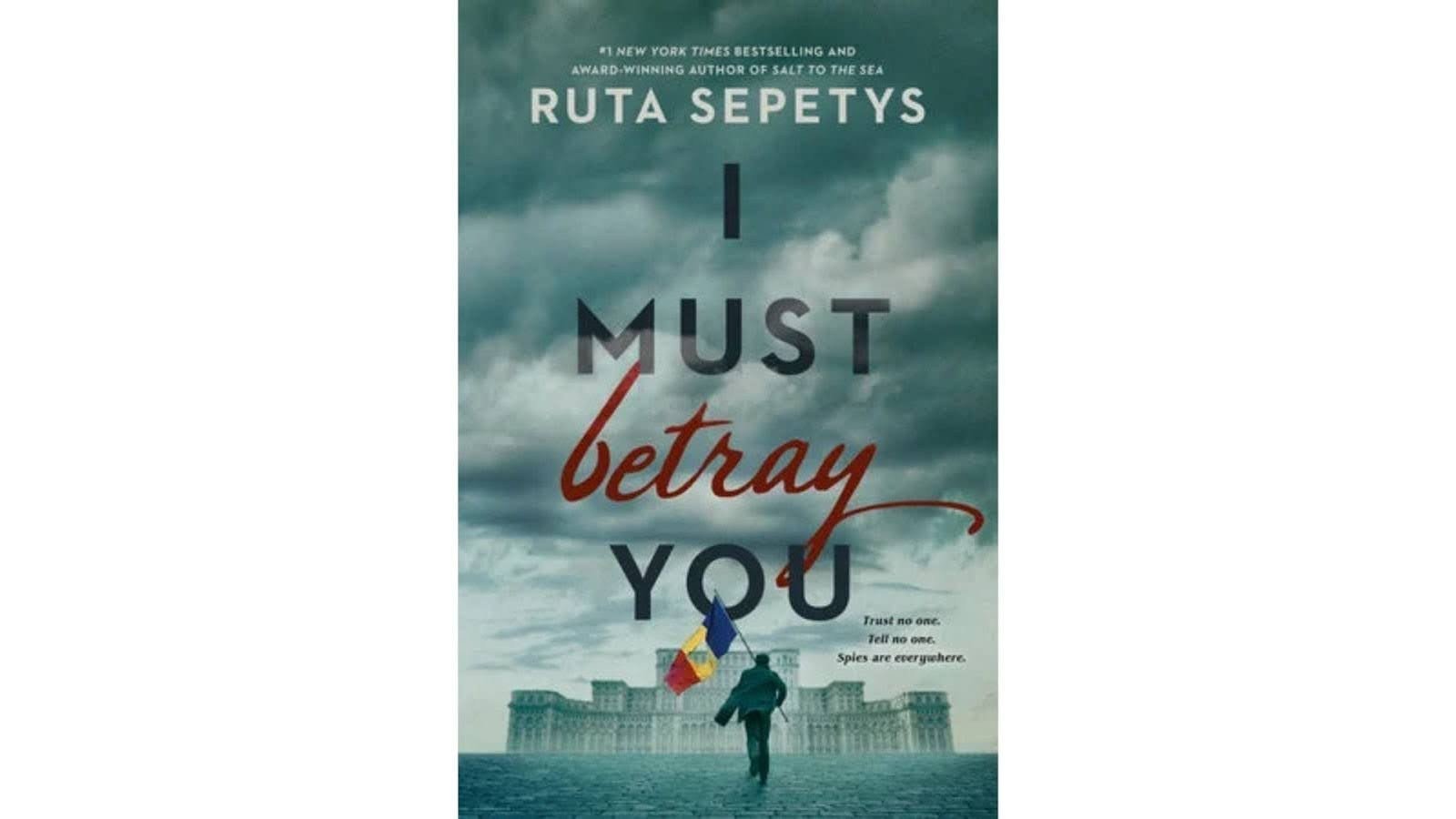
Imagine living in a world where even a wispy word on a fleeting glance could put your family in danger. This is the reality of seventeen-year-old Christian Flores in, I Must Betray You. Set in Romania in 1989.
Christian is forced to become an informer for the secret police, torn between poring over keeping his loved ones safe and staying true to his conscience. Amid the danger and betrayal, he also experienced it.
Ruta Setepys weaves history and humanity together with remarkable skill, showing how ordinary people can search for extraordinary skills and strengthen. This is the novel that thrills, moves, and reminds us.
Complete Plot Summary
This comprehensive summary must betray that your summary covers the full story arc that made this novel a modern classic.
Book Overview and Setting
The story takes place in Romania during 1989, under the harsh rule of dictator Nicolae Ceaușescu. Seventeen-year-old Cristian Florescu lives in a world where fear controls every aspect of daily life. The communist government watches everyone, and neighbors often spy on neighbors just to survive.
Cristian’s family struggles with poverty and constant worry about saying the wrong thing. Food is scarce, heat is limited, and hope seems impossible. The Securitate, Romania’s secret police, controlled the people through terror and threats.
This setting creates the perfect backdrop for a story about courage and the price of freedom. Young readers can understand how different life was for teenagers like them during this time.
Core Plot Summary
The plot begins when Cristian is forced to become an informer with the code name “Oscar.” The secret police threaten his family unless he spies on people around him. This summary shows how an ordinary teenager faces impossible choices between protecting his loved ones and doing what’s right.
Cristian’s grandfather, Bunu, becomes very sick, adding another layer of worry to the family’s problems. Meanwhile, Cristian develops feelings for Liliana Pavel, a girl who represents hope in his dark world.
The story reaches a turning point when Cristian learns the horrible truth about his grandfather’s illness. Bunu wasn’t just sick – he was being poisoned slowly by someone close to the family. This discovery changes everything Cristian thought he knew about trust and betrayal.
Key Story Resolution
The climax comes when the Romanian people rise against Ceaușescu’s government. Cristian finds himself caught between his role as an informer and his desire to join the revolution. He ends up in prison but manages to escape during the chaos of the uprising.
Family secrets come to light as the revolution unfolds. Cristian learns that the people he trusted were actually working for the government. The betrayals run deeper than he ever imagined, reaching into his own home.
The novel ends with Ceaușescu’s execution on Christmas Day, 1989. The epilogue reveals more family secrets that help explain the events throughout the story. This I must betray you summary shows how the personal and political come together in one teenager’s life.
Character Analysis and Development
The characters in this novel show us how ordinary people respond to extreme situations and moral challenges.
Protagonist Analysis
Cristian Florescu starts as a scared teenager who just wants to protect his family. He doesn’t want to be a hero or change the world – he simply wants to survive. His forced role as an informer tears him apart inside because he knows it’s wrong.
As the story progresses, Cristian grows stronger and more confident. He learns to make difficult choices based on his values rather than his fears. The pressure of living a double life forces him to become more mature and thoughtful about right and wrong.
By the end of the novel, Cristian has transformed into someone who can stand up for what he believes in. He moves from being a victim of circumstances to being someone who takes action. This change happens gradually and feels real because the author shows us each step of his growth.
Supporting Characters
Liliana Pavel represents hope and love in Cristian’s dark world. She shows him that beauty and kindness still exist even under the worst conditions. Their relationship gives readers something positive to focus on during the story’s darker moments.
Cristian’s family members each deal with oppression in different ways. His sister Cici tries to stay out of trouble, while his parents struggle to keep the family safe. Bunu, his grandfather, holds onto memories of better times and teaches Cristian about courage through his own example.
Dan Van Dorn, an American, provides an outsider’s view of the situation. He helps readers understand how the rest of the world saw Romania during this time. His presence in the story also shows how international attention helped bring change.
Antagonistic Forces
“Paddle Hands,” the secret police agent who recruits Cristian, represents the face of government oppression. He’s not evil in an obvious way, which makes him more frightening. He shows how the system turned ordinary people into tools of control.
Nicolae Ceaușescu appears throughout the story as the source of all the suffering. The author presents him not just as a distant ruler but as someone whose choices directly affect every character. His downfall provides the story’s ultimate resolution.
The Securitate as a whole creates an atmosphere where no one can be trusted completely. This I must betray you summary shows how the secret police system made everyone suspicious of their neighbors, friends, and even family members.
Major Themes and Literary Analysis
The novel explores several important themes that help readers understand both the historical period and universal human experiences.
Betrayal and Loyalty
The story shows how political systems can force people to betray those they love most. Families become divided when survival depends on reporting on each other. Trust becomes almost impossible when anyone might be working for the government.
Cristian struggles with divided loyalties throughout the book. He wants to protect his family, but he also wants to do the right thing. The author shows how these competing loyalties create impossible situations for ordinary people.
The theme of betrayal works on multiple levels in the story. Personal betrayals mirror the larger political betrayals happening in the country. This I must betray you summary demonstrates how individual stories reflect bigger historical events.
Freedom vs. Survival
Characters constantly face choices between staying safe and fighting for freedom. Some choose survival at any cost, while others risk everything for the chance at a better life. The author shows that neither choice is simple nor clearly right.
Cristian’s character represents this conflict perfectly. He wants freedom, but also wants his family to survive. The story shows how young people especially struggled with these choices because they had less experience making life-or-death decisions.
The revolution scenes show what happens when enough people choose freedom over safety. The author demonstrates that social change requires individual courage, even when the personal cost is very high.
Truth and Propaganda
The government controls information to maintain power over the people. Characters struggle to separate truth from lies in a world where propaganda is everywhere. This creates confusion and makes it hard to know who to trust.
Cristian learns to question everything he’s been told about his country and his family. The author shows how discovering truth can be both liberating and painful. Sometimes ignorance really does feel safer than knowledge.
The theme of truth versus propaganda remains relevant today. This I must betray you summary shows how people in any time period must learn to think critically about the information they receive.
Historical Context and Significance
Understanding the historical background helps readers appreciate both the accuracy and the importance of this novel.
Romanian Revolution of 1989
The protests in Timișoara really happened and sparked the revolution that ended Ceaușescu’s rule. The author based many scenes on actual events that took place during December 1989. These protests showed the world that the Romanian people were ready to fight for freedom.
The revolution developed quickly once it started, catching both the government and the people by surprise. In just a few days, a government that had seemed unshakeable completely collapsed. The speed of these changes shows how ready people were for a different way of life.
Ceaușescu’s execution on Christmas Day really occurred and marked the definitive end of communist rule in Romania. This I must betray you summary shows how these historical events affected individual families like Cristian’s.
Communist Surveillance State
The Securitate really did recruit teenagers and ordinary citizens as informers. Families often didn’t know which members were reporting on them to the government. This created an atmosphere of constant fear and suspicion that lasted for decades.
Daily life under this system involved constant worry about saying or doing the wrong thing. People had to be careful about their conversations, their relationships, and even their facial expressions. The author accurately portrays how exhausting it was to live under such conditions.
The surveillance system affected every part of society, from schools to workplaces to families. Children grew up learning not to trust completely, even those closest to them. This I must betray you summary shows how political oppression damages personal relationships.
Author’s Research and Accuracy
Ruta Sepetys spent years researching Romanian history and interviewing people who lived through this period. Her attention to historical detail makes the story feel authentic and respectful to those who experienced these events. She consulted with historians and survivors to ensure accuracy.
The author balances historical facts with compelling storytelling. She doesn’t let the history overwhelm the personal story, but she also doesn’t sacrifice accuracy for drama. This approach helps readers learn about history while staying engaged with the characters.
Some details in the novel are fictional, but they’re based on real experiences that many families had during this time. This I must betray you summary shows how the author uses specific fictional events to represent broader historical truths.
Critical Reception and Educational Value
The novel has received widespread praise for both its literary merit and its educational importance.
Literary Awards and Recognition
Critics have praised the book for its authentic portrayal of life under communist rule. Many reviews highlight how the author makes historical events feel immediate and personal. The novel has been recognized with several awards for young adult historical fiction.
Readers appreciate how the book makes a complex historical period understandable and engaging. The story works both as entertainment and as education. Teachers and librarians have particularly praised its ability to help students connect with history.
Compared to Sepetys’ other historical novels, this book stands out for its focus on more recent events. While her other works deal with World War II, this novel shows that oppression and courage are timeless themes.
Educational Applications
History teachers use this novel to help students understand the end of the Cold War from a personal perspective. The story makes abstract political concepts concrete and relatable. Students can better understand concepts like totalitarianism and revolution when they see them through Cristian’s eyes.
Discussion questions about the book often focus on moral choices and personal responsibility. Students can debate what they would have done in Cristian’s situation. These conversations help develop critical thinking skills while learning about history.
The novel also works well for teaching about different perspectives on historical events. Students can compare Cristian’s experience with what they might read in history textbooks. This helps them understand that history affects individuals differently.
Reading Recommendations
The book is most suitable for readers aged 14 and up due to its mature themes and some violence. Younger readers might find some scenes disturbing or difficult to understand. However, mature middle school students can certainly handle the content with proper discussion and support.
Readers who enjoy this book might also like other historical fiction about Eastern Europe or other works by Ruta Sepetys. Books about similar time periods or themes of resistance and courage would appeal to the same audience.
Teachers often pair this novel with non-fiction works about the Cold War or memoirs from people who lived under communist governments. This combination helps students understand both the personal and historical aspects of this time period.
Conclusion
I Must Betray You is not only a gripping story, but it is a meaningful glimpse into recent history. Ruta Setepys brings Romania in 1989 so vividly to life because the author twists together historical moments and events into a deeply personal kind of story like this.
The reminder of the fact that freedom is never guaranteed stayed with me throughout most of the book. Even ordinary people, teenagers like Chritain, can act with extraordinary bravery facing an impossible decision.
To me, this book inspires and opens my eyes. It powerfully reminds me that loyalty, courage, and moral conviction are important, as even the smallest action can truly make a difference.
Frequently Asked Questions
What is the main plot of “I Must Betray You”?
The novel follows 17-year-old Cristian Florescu in 1989 Romania as he’s forced to become a government informer. He struggles between protecting his family and doing what’s right during the Romanian Revolution that ended Nicolae Ceaușescu’s dictatorship.
Who wrote “I Must Betray You” and when was it published?
Ruta Sepetys wrote “I Must Betray You,” publishing it in 2022. Sepetys is known for her historical fiction novels that focus on lesser-known events in recent history, particularly those involving young protagonists during wartime or political upheaval.
Is “I Must Betray You” based on true events?
Yes, the novel is based on real historical events during the 1989 Romanian Revolution. While Cristian and his family are fictional characters, the author extensively researched the time period and based many scenes on actual events and survivor accounts.
What age group is “I Must Betray You” appropriate for?
The book is recommended for readers aged 14 and up due to mature themes, including political oppression, betrayal, and some violence. However, mature middle school students can read it with proper discussion and support from teachers or parents.
What are the main themes in “I Must Betray You”?
The novel explores themes of betrayal versus loyalty, survival versus freedom, and truth versus propaganda. It examines how political oppression affects personal relationships and how ordinary people find the courage to resist when faced with impossible choices.