

You’re looking for the “God Saw You Getting Tired” poem because someone you love is hurting. Maybe you’re grieving a loss yourself. Maybe you just need words that understand how heavy life feels right now. This poem has brought comfort to thousands of people.
In this article, you’ll find the full poem, its meaning, and ways to use it when words feel impossible. I’ll show you how people share it at funerals, in sympathy cards, and during those quiet moments when grief hits hardest.
I know this is a tender time. I’ve been there, sitting in that same stillness, looking for something that captures what the heart can barely say.
This isn’t about fancy poetry analysis or religious debate. It’s about finding words that help, whether for yourself or someone who needs to know they’re not alone.
Full Text of the God Saw You Getting Tired Poem
I know you’re looking for the exact words. The ones that somehow say what your heart can’t. Let me share the versions people turn to most when they need comfort.
Most Popular Version
This is the version you’ll see everywhere. Memorial cards carry these lines. Funeral programs are printed on the back. People text them to each other when someone passes.
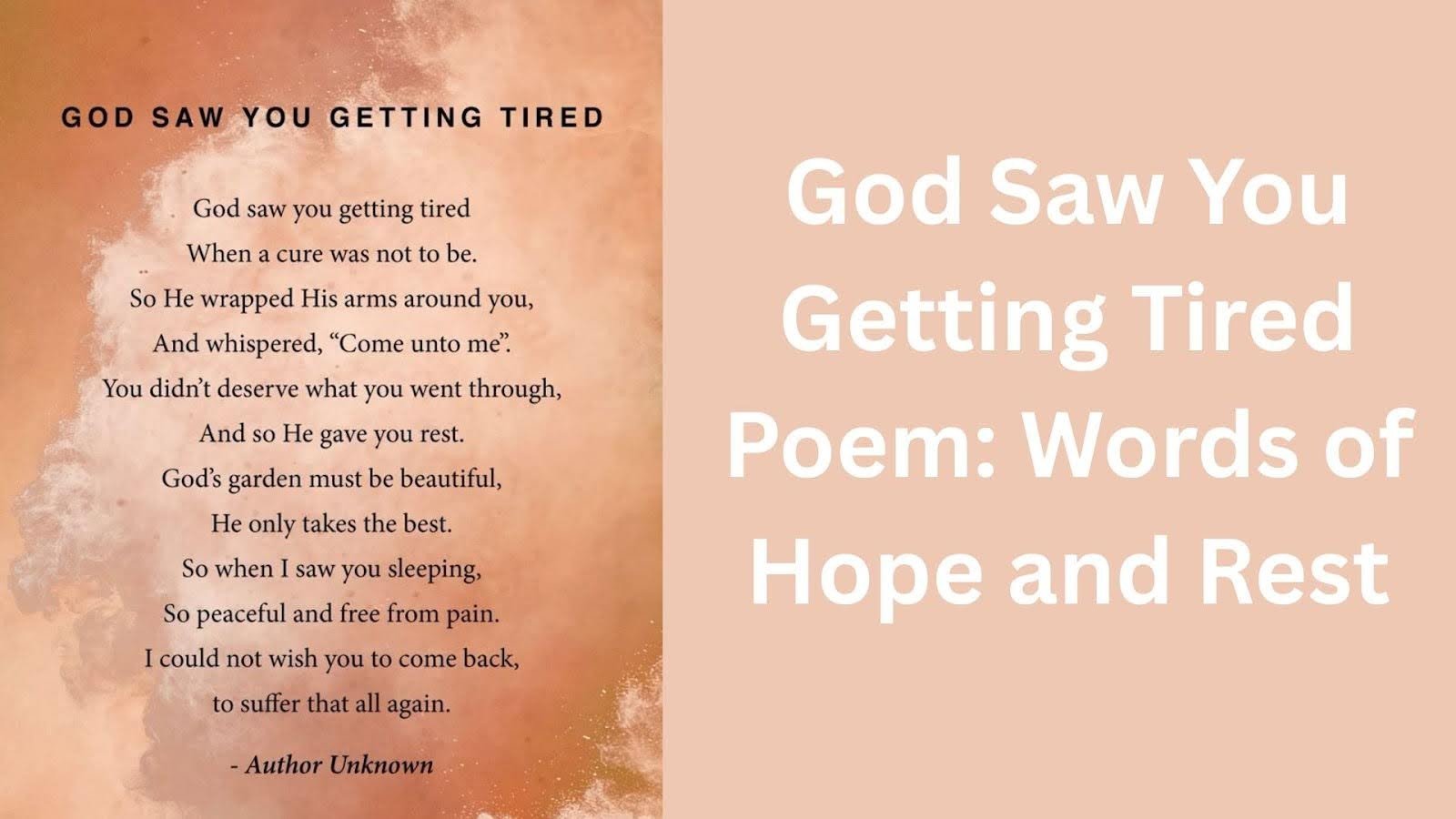
The poem starts with “God saw you getting tired, and a cure was not to be.” It goes on to talk about how God put his arms around the person and whispered, “Come to me.” You’ll find it talks about suffering ending and finding peace. It’s short, direct, and honest about pain.
Version 2 (Extended Garden Imagery)
This one’s different. It talks about God’s garden needing another flower. You’ll hear this at services where people want to focus on beauty and peace rather than illness.
The garden version adds more hopeful imagery. It describes heaven as a place of beauty where your loved one now rests among flowers. Some families prefer this because it feels gentler and more uplifting. It’s especially common for younger people or after unexpected losses.
Version 3 (She/Her Variation)
Sometimes you need the words to be specific. This version uses “she” and “her” throughout. I’ve seen it used most often for moms, grandmothers, sisters, and daughters.
The meaning stays the same, but personalizing the pronouns makes it hit different. It feels more direct, more about your actual person. You’re not reading a generic poem anymore. You’re reading about her, and that matters when you’re grieving someone specific.
Meaning of the “God Saw You Getting Tired” Poem
You might be wondering what makes this poem stick with people. It’s not just pretty words. There’s a real meaning here that speaks to what you’re feeling right now.
Themes of Divine Compassion
The poem starts with God watching. He sees the struggle. He sees the pain that nobody can fix. This isn’t about God being distant or uncaring.
It’s about compassion that acts. God doesn’t watch someone suffer endlessly. He steps in and offers rest. The poem frames death as mercy, not punishment. That changes everything when you’re trying to make sense of loss.
Understanding Pain, Loss, and Acceptance
Here’s the hard part. You loved them. You wanted them to stay. But the poem says, “we could not make you stay.” That line hits different for everyone.
It captures that impossible tension. You’d do anything to keep them here, but you also couldn’t watch them hurt anymore. Letting go with love is different than giving up. The poem knows that. It says that you need permission to feel.
Symbolism Throughout the Poem
Every line means something deeper. The “golden heart” isn’t just poetic language. Gold represents purity and worth. Your person mattered. “Hard working hands at rest” shows the end of struggle, the end of pain.
Then there’s “He only takes the best.” This line comforts people who ask, “Why them?” It reframes the loss. It’s not random or unfair. It’s recognition. These symbols are simple enough to remember when grief makes everything foggy.
Why the Poem Brings Peace
I’ll be honest with you. No poem fixes grief. But this one does something important. It gives you a way to think about death that doesn’t feel cold or random.
It offers a gentle story: someone you loved was tired, God saw it, and rest came. It shifts your focus from what you lost to what they gained. And it tells you that your grief and your love are both okay. You can miss them and feel relieved for them at the same time. That’s why people keep sharing it.
Emotional and Spiritual Reflections
This poem does more than just sound nice. It touches something deeper. Let me show you why it connects with people on a spiritual and emotional level:
- Death brings peace: Finally lying down after the hardest experience imaginable
- God’s perfect timing: Not random chance but His intentional, loving care
- Matthew 11:28 connection: “Come to me and I will give you rest”
- Watching daily decline: Someone losing strength bit by bit each passing day
- Honest about suffering: Doesn’t pretend everything was fine before the end
The poem doesn’t make death scary. It makes it sound like rest. Like finally getting to lie down after the longest, hardest day.
It puts timing in God’s hands, not random chance or medical failure. You’ll hear echoes of Scripture throughout. Matthew 11:28 promises rest to the weary, and this poem is basically that verse in story form. It names the exhaustion you’ve been watching.
Authorship Behind “God Saw You Getting Tired”
You’ve probably wondered who actually wrote this poem. The truth is more interesting than you’d think.
Most people have no idea where it came from, but there’s a real story here:
- Frances M. Coelho wrote: The original poem back in 1939 for her mother
- Kathleen Coelho contributed: Changes and variations came later from her daughter
- Poor man’s copyright: Frances sealed it in an envelope and mailed it
- Postal stamp proof: That 1939 postmark became her evidence of authorship
- Lost in sharing: Memorial cards and funeral programs left her name off
Frances wrote this from her own grief. It was just a daughter’s way of saying goodbye. But the words she chose ended up resonating with thousands of families over the decades.
The poem spread everywhere, and people shared it without knowing who wrote it. Now you know the real story behind those comforting lines.
When and How to Use the Poem
You can use this poem in many ways when you’re dealing with loss. I’ll show you the best times and places to share these words.
- For funeral programs: Print it in memorial slideshows, place it on memory tables, inside sympathy cards, or as part of spoken readings during services.
- In written tributes: Use one or two verses in obituaries and online memorials when you don’t know what to say about loss.
- During prayer time: Read it aloud in private moments because speaking the words helps more than reading them silently in your head.
- In your journal: Keep a copy where you’ll see it daily and return to it when sadness feels too heavy to handle alone.
- With support groups: Share specific lines with your therapist or grief counselor to express feelings that are hard to put into words.
Variations and Adaptations for Personal Use
The poem works best when it feels personal to you. I’ll show you simple ways to change it while keeping its heart intact.
- Gender-specific versions: Switch pronouns to “she” or “he” to match the person you lost, and keep all other words the same for respect.
- Shortened versions: Use just two or three verses for casual settings like social media posts or text messages to friends.
- Extended versions: Read the full poem at formal events like funerals, memorial services, or printed keepsakes that families will save.
- Personal line additions: Add one sentence at the end about a specific memory, like “I’ll remember your laugh every morning,” without changing the original verses.
- Name insertions: Replace “you” with their actual name in one or two places, but don’t overdo it or the flow breaks.
Conclusion
The “God Saw You Getting Tired” poem speaks to something we all feel during loss. It reminds us that rest comes after suffering, and that saying goodbye doesn’t mean forgetting. These words have comforted countless hearts because they’re honest about pain.
You’ve got what you came for now. Whether you’re using this poem at a service, writing it on a card, or just holding onto it for yourself, you have words that you understand. Grief is hard and confusing, but you don’t have to face it without something to lean on.
Take your time with these words. Read them when you need to. Share them when someone else is hurting. If this poem has touched your life or you have your own story about finding comfort in hard times, I’d be honored if you shared it below.
Frequently Asked Questions
What is the “God Saw You Getting Tired” poem about?
The poem is about loss and finding peace after suffering. It describes how God saw someone struggling and chose to bring them home to rest. It’s meant to comfort those grieving by showing that death can be a release from pain, and that loved ones are now at peace and free from hurt.
Who wrote the “God Saw You Getting Tired” poem?
The author is unknown. This poem has been passed around for years, shared at funerals and memorial services. Like many comforting verses, it’s become part of our collective grief language. Nobody knows exactly where it started, but its message has touched countless people dealing with loss.
When should I use the “God Saw You Getting Tired” poem?
Use it at funeral services, memorial programs, sympathy cards, or social media tributes. It works well when someone has passed after a long illness or struggle. Many people also keep it for personal comfort during grief. It’s appropriate whenever you need words that acknowledge both pain and peace.
Is the “God Saw You Getting Tired” poem religious?
Yes, it has Christian themes about God and heaven. However, many people from different backgrounds find comfort in its message about rest after suffering. If you’re sharing it with someone, consider whether religious content fits their beliefs. The core message about peace and release resonates across many faiths.
Can I personalize the “God Saw You Getting Tired” poem?
Absolutely. Many people add the loved one’s name, change pronouns, or adjust lines to fit their situation. Some add a photo or combine it with other meaningful verses. The poem is meant to bring comfort, so adapting it to honor your specific person makes it even more meaningful and personal.