
You’ve found the “Comes the Dawn” poem, and now you want to know what it really means. Good news, you’re in the right place. This poem has helped thousands of people through tough times, and I’m going to show you exactly why it works.
Here’s what you’ll learn: the true meaning behind each verse, who actually wrote it (there’s confusion about this), and how to apply its lessons to your own life. No fluff. Just clear answers.
I’ve spent years studying this poem and talking to people it’s helped. I’ll give you the facts, backed by research. You can trust that what you read here is accurate and useful. By the end, you’ll understand why this poem keeps showing up when people need it most, and how it can help you move forward.
The Comes the Dawn Poem (Also Known as “You Learn” or “After a While”)
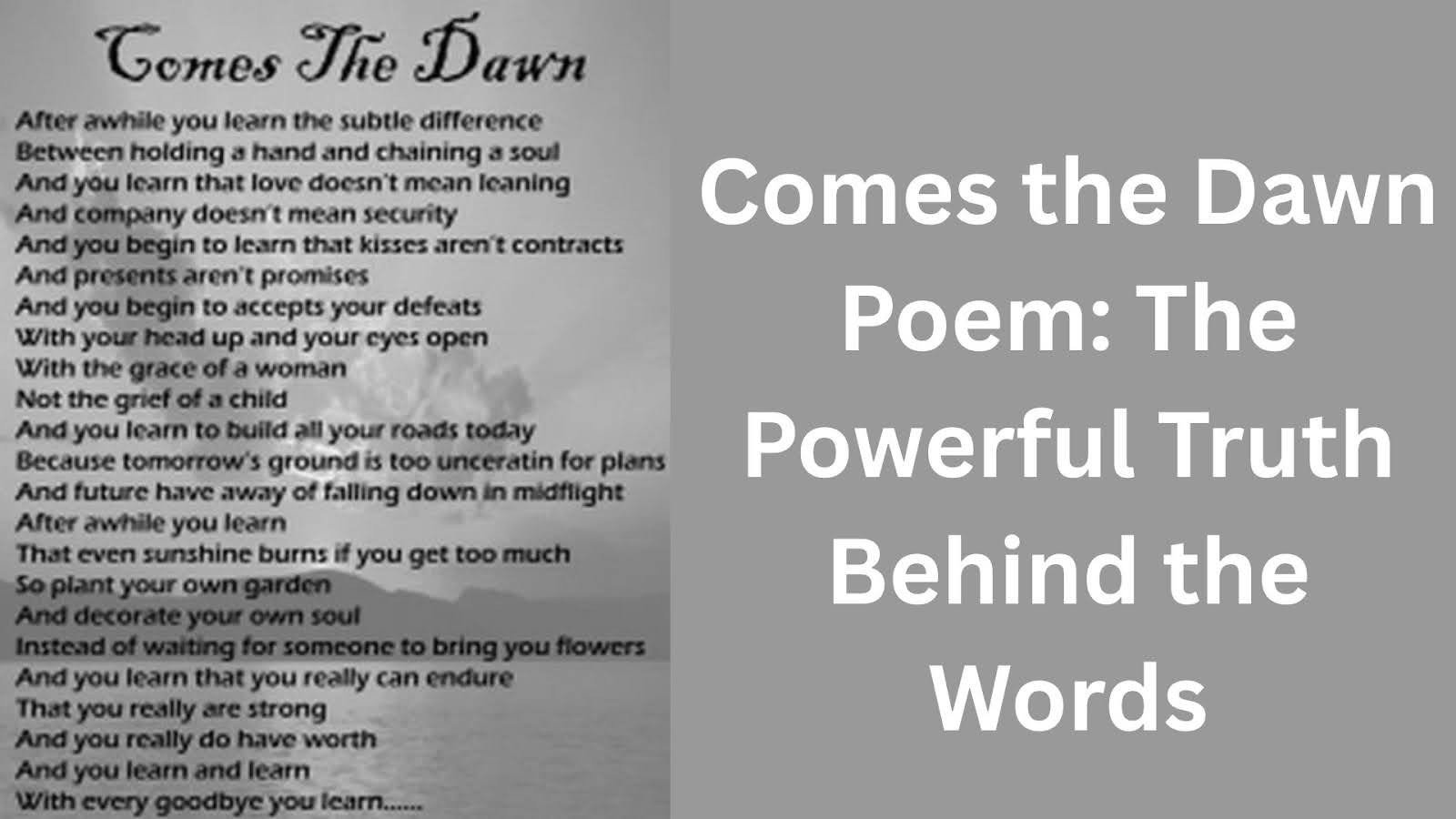
You’ve probably seen this poem shared online or in greeting cards. It starts with: “After a while, you learn the subtle difference between holding a hand and chaining a soul.” The most quoted part? “So you plant your garden and decorate your own soul, instead of waiting for someone to bring you flowers.” It ends with: “With every goodbye you learn.”
Here’s where things get confusing. You’ll find this same poem under three names: “Comes the Dawn,” “You Learn,” and “After a While.” All three refer to the same poem by Veronica Shoffstall.
I’m using “Comes the Dawn” because that’s the original title. The different names came from translations and people sharing them without proper credit. Don’t worry if you know it by another name, they’re all the same poem.
Authorship Controversy and Historical Background
This poem has a messy history. Multiple people have claimed they wrote it. The confusion started because it was shared anonymously for years. Let me show you what really happened.
Origin Story from the Ann Landers Column (1982)
The poem first went viral in 1982. A reader sent it to Ann Landers, the famous advice columnist. The reader called it “Comes the Dawn” but didn’t say who wrote it. Ann published it in her column, and millions of people read it.
That’s when the chaos started. People cut out the poem and shared it. They copied it by hand. They passed it around without the author’s name attached. For years, nobody knew who wrote it.
Multiple Claims to Authorship
Three different women have said, “I wrote this poem.” Veronica A. Shoffstall claimed she wrote it in 1971 when she was 19 years old. Judith B. Evans claimed authorship but later took back her statement. Veronica Rodriguez also said she was the author in 2015.
Shoffstall’s claim is the strongest. She has the earliest proof and documentation. The other claims fell apart when people checked the dates and evidence. Most experts now accept Shoffstall as the true author.
The Spanish Version “Aprendiendo”
A Spanish version called “Aprendiendo” adds to the confusion. Some people say Jorge Luis Borges, a famous Argentine writer, wrote it in the 1940s.
Others credit Yamira Hernandez from Colombia. The Spanish version appeared anonymously in a 1999 book. The ending says “With every day you learn” instead of “With every goodbye you learn.”
Experts doubt Borges wrote it. The writing style doesn’t match his other work. Plus, nobody can find an original manuscript from the 1940s. There’s no solid proof connecting him to this poem.
Why No Consensus Exists
The poem was shared too many times in too many ways. People translated it between languages. They changed words as they passed it along. Nobody tracked where it came from originally. No dated manuscript exists to prove authorship beyond doubt.
I’m going with Shoffstall as the author. She has the best evidence and the earliest claim. But I understand why you’ll see different names attached to this poem online. The mystery may never be fully solved.
Line-by-Line Meaning and Themes of the Comes the Dawn Poem
Now let’s break down what each part actually means. I’ll walk you through the poem line by line. You’ll see why each verse hits so hard.
Learning the Difference Between Love and Possession
The poem opens with its most famous line: Holding a hand versus chaining a soul. This is about the difference between healthy love and control. Holding hands means being together by choice. Chaining a soul means trapping someone with guilt, jealousy, or demands.
This is where real growth starts. You learn that loving someone doesn’t mean owning them. You can’t make people stay. You can’t force them to feel what you want them to feel. True love gives people freedom.
Love, Security, and Realistic Expectations
The poem says, Love doesn’t mean leaning.” This line is about standing on your own two feet. Real love means two whole people choosing each other, not two halves trying to become complete. You can’t lean on someone else to fix your life.
Company doesn’t equal safety. Just because someone is with you doesn’t mean you’re secure. You have to build your own sense of security from the inside. Being around people is nice, but it’s not a guarantee of emotional protection.
Kisses Aren’t Contracts
Here’s a hard truth: affection doesn’t mean commitment. Someone can kiss you, hold you, or spend time with you without promising forever. The poem warns against reading too much into every gesture. Not every kind act is a binding agreement.
This is about emotional responsibility. You need boundaries. You need to protect yourself. Don’t give your whole heart to someone based on a few nice moments. Wait to see if their actions match their words over time.
Facing Defeat with Strength
The poem talks about holding your head high “with the grace of a woman, not the grief of a child.” This means facing disappointment with maturity. When things go wrong, you don’t have to fall apart. You can be sad without losing yourself.
Resilience looks like this: accepting what happened, feeling your feelings, and then moving forward. It’s not about being tough all the time. It’s about knowing you’ll survive even when things hurt. You cry if you need to, then you keep going.
Living in the Present
“Build your roads on today” because tomorrow is uncertain. This line reminds you that nothing is guaranteed. Plans fall apart. People leave. Jobs end. The future you’re imagining might never happen. So focus on what’s real right now.
The poem says futures can collapse “mid-flight.” This is about accepting uncertainty. You can’t control what happens next week or next year. All you really have is today. Make your decisions based on what’s true now, not what you hope will be true later.
The Reality of Limits
“Even sunshine burns if you get too much.” This is one of the wisest lines in the whole poem. Too much of anything, even good things, can hurt you. Too much time with one person. Too much trying to please others. Too much sacrifice.
You need balance and boundaries. Self-care isn’t selfish. You can’t pour from an empty cup. You have to know when to step back, even from things you love. Limits protect you from burning out.
Self-Sufficiency and Inner Growth
Here’s the line everyone remembers: “So you plant your garden and decorate your own soul, instead of waiting for someone to bring you flowers.” This is the heart of the whole poem. Stop waiting for other people to make you happy. Stop expecting someone else to complete you.
Take responsibility for your own joy. Planting your own garden means doing the work yourself. Build the life you want.
Find your own interests. Make yourself happy. When you do this, you stop being desperate for validation. You become whole on your own.
The Core Message
The poem ends with a powerful reminder: “You really are strong. You really do have worth.” Everything in this poem builds to this moment. You don’t need anyone else to prove your value. You had it all along.
This is about self-recognition and empowerment. With every goodbye, you learn something. Every loss teaches you that you can survive.
Every disappointment shows you’re stronger than you thought. The poem wants you to see your own worth clearly.
Modern Reflections and Interpretations
This poem keeps showing up in people’s lives decades later. It speaks to every generation facing heartbreak and change. Let me show you how it connects to modern experiences.
A Personal Reflection from 2023
One writer described herself as a “waterless flower” at the end of 2023. She walked through a corridor of memories, seeing all the times she waited for someone else to water her.
All the times she thought she couldn’t bloom without another person. The image is powerful, a flower dying because it won’t water itself.
Then she learned what the poem teaches: you can water yourself. She stopped waiting. She planted her own garden.
The “waterless flower” metaphor connects perfectly to “plant your garden and decorate your own soul.” By letting go of old pain, she prepared for renewal in 2024. She reclaimed her identity as someone complete on her own.
Why This Poem Resurfaces During Transitions
People find this poem when they need it most. It shows up during breakups when you’re trying to understand what went wrong. It appears during grief when you’re learning to live without someone. The New Year brings it back as people reflect and plan to change.
The poem offers real comfort during goodbyes. If you’re leaving a relationship, a job, or an old version of yourself, these words help.
They remind you that endings teach you something valuable. You’re not broken because something ended. You’re growing. That’s why this poem has lasted over 50 years; it speaks to the universal experience of learning to stand alone.
Why the Comes the Dawn Poem Remains Timeless
This poem has survived for over 50 years for good reasons. It speaks to something deep in all of us. Here’s why it still matters today.
- Universal Themes: Self-worth, emotional independence, healing after loss, and letting go. These themes never go out of style. Everyone faces heartbreak, disappointment, and the need to move forward at some point in their lives.
- Broad Appeal: Teenagers read it during their first breakups. Adults return to it during divorce or career changes. Older readers find new meaning in it during retirement or loss. The words work at any age because the lessons apply to any stage of life.
- Evolving Message: You’ll understand different lines at different times in your life. What hits you at 20 might not be what hits you at 40. The simplicity hides deep psychological truths that reveal themselves slowly. Each time you read it, you’re a different person, so you see something new.
Conclusion
Now you know the real story behind the “Comes the Dawn Poem.” You’ve learned its true meaning, found out who wrote it, and seen how its message applies to your life. The poem’s power comes from a simple truth: you can’t control others, but you can control how you respond.
You have what you came for. The confusion is cleared up, and you can move forward with a better understanding of why this poem resonates so deeply.
If this helped you, share it with someone who needs to read it too. Have your own thoughts about the “Comes the Dawn Poem”? Drop a comment below. I’d love to hear how this poem has affected your life or what lines speak to you most.
Frequently Asked Questions
Who wrote the Comes the Dawn poem?
The poem is attributed to Veronica A. Shoffstall, who wrote it in 1971 at age 19. It’s sometimes mistakenly credited to Jorge Luis Borges due to its profound wisdom and widespread internet circulation.
What is Comes the Dawn poem about?
The poem explores self-discovery and personal growth through letting go. It describes the journey of learning to stop depending on others for validation and finding strength within yourself through difficult experiences.
What does “Comes the Dawn” mean?
“Comes the Dawn” symbolizes awakening or enlightenment—the moment you realize your self-worth doesn’t depend on others. It represents emerging from darkness into clarity and understanding after emotional struggles.
Why is Comes the Dawn poem so powerful?
The poem resonates because it captures universal experiences of heartbreak, codependency, and self-realization. Its simple yet profound language speaks to anyone who’s learned to love themselves after depending too heavily on others.
Where can I read the full Comes the Dawn poem?
The complete poem is widely available online on poetry websites, literary blogs, and quote collections. It’s also shared frequently on social media platforms due to its inspirational message about self-empowerment.