



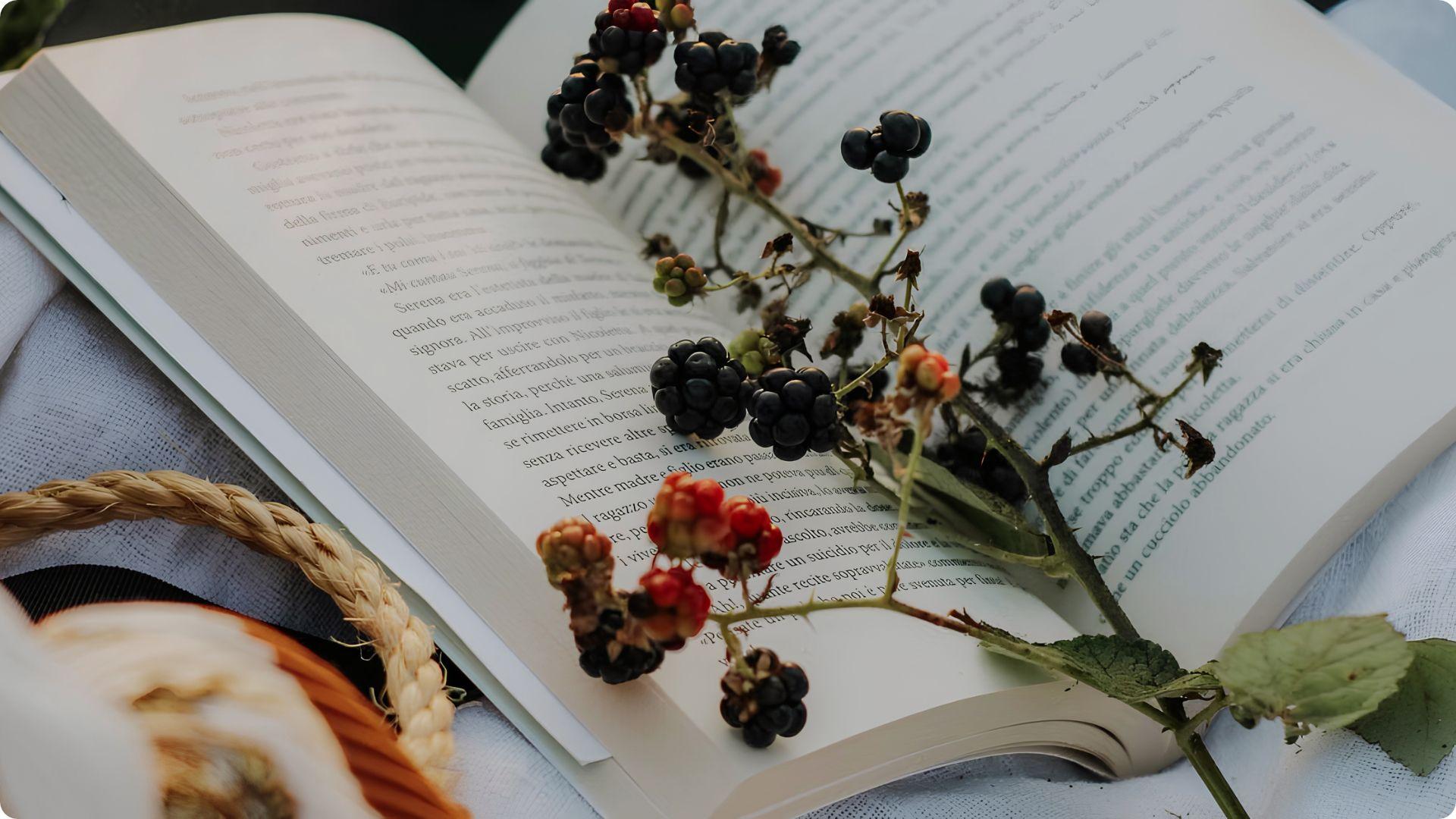
Each late August, the speaker in Irish poet Seamus Heaney’s “Blackberry-Picking” fills cans with ripe fruit, and each year the fruit spoils in storage.
That small, repeated letdown is the subject of this 24-line poem from his 1966 collection Death of a Naturalist, and it makes the blackberry-picking poem a lesson in how fast sweet things turn.
Robert Frost makes a similar point in eight lines in Nothing Gold Can Stay, but Heaney gets there through a harvest you can almost taste.
Read on for where to find the full text, then a short note on what it means and where it comes from.
Blackberry Picking Poem Full Text
The full text of “Blackberry-Picking” is below. It runs 24 lines, split into a longer first stanza of 16 lines about the harvest and a shorter second stanza of 8 lines about the spoilage, and it is dedicated to Philip Hobsbaum.
Heaney’s poem is also one of the 16 picks in our poems about food guide.
Some printings set it as a single block, so line breaks may differ between editions.
Late August, given heavy rain and sun
For a full week, the blackberries would ripen.
At first, just one, a glossy purple clot
Among others, red, green, hard as a knot.
You ate that first one and its flesh was sweet
Like thickened wine: summer’s blood was in it
Leaving stains upon the tongue and lust for
Picking. Then red ones inked up and that hunger
Sent us out with milk cans, pea tins, jam-pots
Where briars scratched and wet grass bleached our boots.
Round hayfields, cornfields and potato-drills
We trekked and picked until the cans were full,
Until the tinkling bottom had been covered
With green ones, and on top big dark blobs burned
Like a plate of eyes. Our hands were peppered
With thorn pricks, our palms sticky as Bluebeard’s.
We hoarded the fresh berries in the byre.
But when the bath was filled we found a fur,
A rat-grey fungus, glutting on our cache.
The juice was stinking too. Once off the bush
The fruit fermented, the sweet flesh would turn sour.
I always felt like crying. It wasn’t fair
That all the lovely canfuls smelt of rot.
Each year I hoped they’d keep, knew they would not.
Credit: Seamus Heaney, “Blackberry-Picking,” from Death of a Naturalist (Faber and Faber, 1966).
Source: Death of a Naturalist (1966)
Blackberry Picking Poem Meaning
What Is the Main Message of the Poem?
The poem’s central idea is that sweet things spoil, and that growing up means learning to live with that.
Heaney builds it from a yearly harvest in which the children’s hunger fills their cans with more fruit than will keep, and the berries rot however carefully they are hoarded, yet the speaker’s hope returns every year.
How the Two Stanzas Carry the Meaning
The longer first stanza runs on through long sentences as the children gorge on berries, scratch their hands in briars, and compare their sticky palms to Bluebeard’s, the murderer of folklore.
The shorter second stanza slows into flat statements once the stored fruit grows a grey fur and begins to stink.
The couplets mostly half-rhyme or do not rhyme at all, so the clean rot/not rhyme that closes the poem lands with extra weight and holds the speaker’s hope and his knowledge together.
Greed, Tone and the Smell of Rot
Words like hoarded and cache make the harvest sound like stockpiling, which invites a reading of the rot as the price of greed rather than bad luck.
The speaker’s protest that it was unfair sounds like a child’s objection to how the world works. The tone moves from greedy delight in the first stanza to rueful resignation in the second, a grown speaker recalling a child’s grief.
On a second reading, the detail that stands out is smell, which appears only in the second stanza, when the loss arrives.
Where the Poem Comes From
Heaney published the blackberry picking poem in Death of a Naturalist (Faber and Faber, 1966), his first major collection, as Seamus Heaney’s official site confirms.
He dedicated it to Philip Hobsbaum, who guided a Belfast poetry workshop that Heaney joined, according to the Poets.org biography of Seamus Heaney.
Read it aloud once and pause at the start of the second stanza, where the pace and mood change, because that single turn carries most of the meaning.