

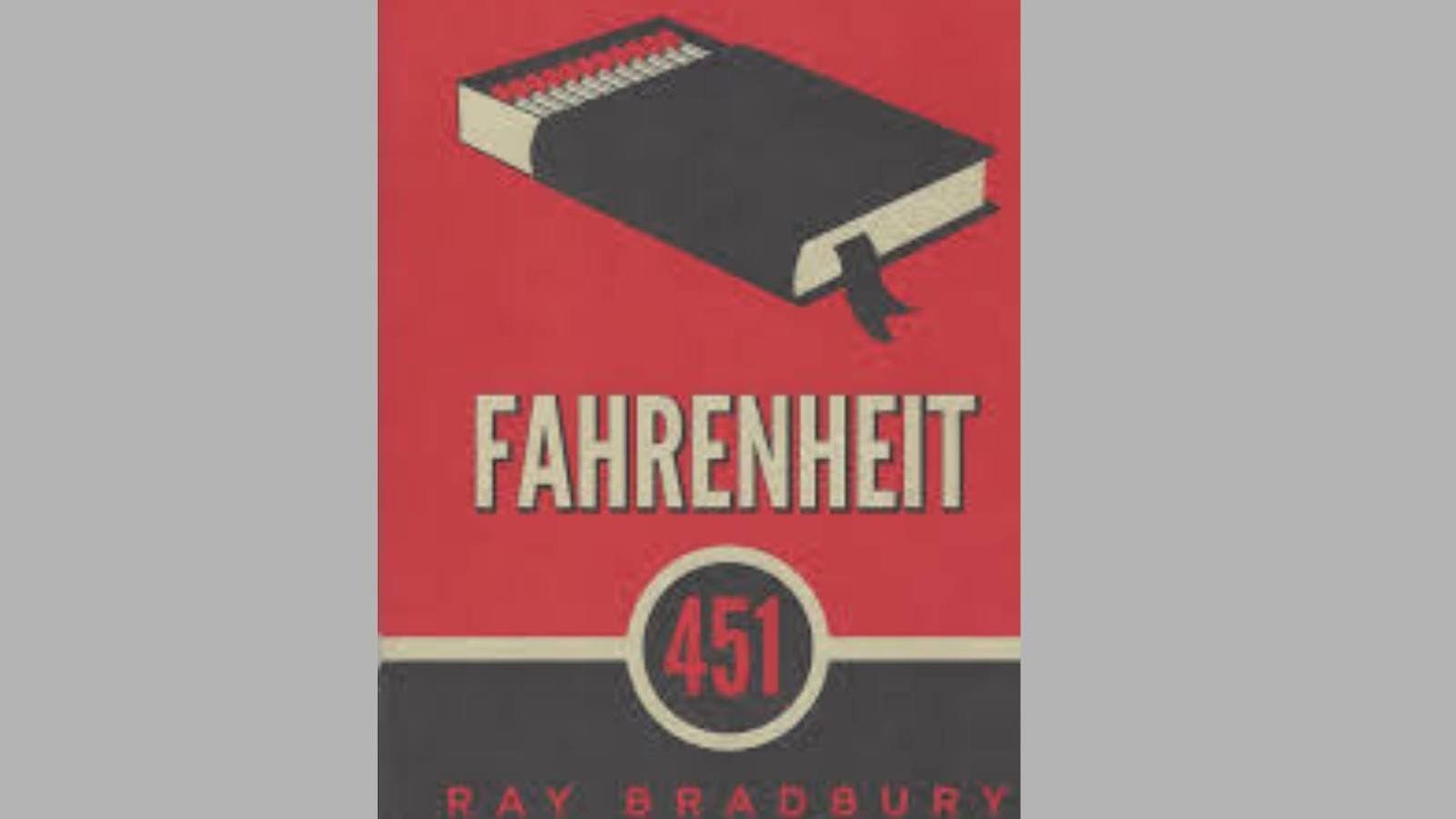
What about banning books along with knowledge? What if society’s protectors burned society’s members? This is Fahrenheit 451’s world.
Guy Montag is the focus of the story, and he is also a fireman. He starts to doubt his work to burn books. He learns of the danger of ignorance and the strength that ideas have. The novel reveals a society addicted to empty entertainment.
I will share about how the themes within Fahrenheit 451 connect to today, and I will review it in this blog. Now, information spreads everywhere. Few truly pay attention. Reading, questioning, and thinking are vital pursuits, this novel reminds its audience.
Quick Summary of the Book
At its core, Fahrenheit 451 shows us a society that chose comfort over knowledge.
I found Fahrenheit 451 both chilling and fascinating. Guy Montag works as a fireman in a future America where books are forbidden, and instead of putting out fires, he starts them, burning books and the homes that hide them.
At first, Montag believes in his work completely, until he meets Clarisse, a curious teenager whose simple questions make him notice the world in a way.
Watching Montag’s slow awakening felt incredibly personal. He begins taking books, trying to understand their meaning, and gradually starts to rebel against the oppressive system.
What hit me most was how the book feels eerily relevant today. Montag’s wife, Mildred, represents the emptiness of a life consumed by screens and distractions, a world where people willingly give up knowledge, much like in our digital age.
First Impressions and Reading Experience
Reading Fahrenheit 451 as an adult brings different insights than discovering it in high school English class.
As teenagers, many readers focus on the action book burning, the mechanical hound, and Montag’s escape. The deeper themes about technology and human connection often get lost. Coming back to this Fahrenheit 451 book review as an adult, the warnings about screen addiction and shallow relationships feel much more personal and urgent.
Bradbury’s writing style can challenge some readers. His prose flows like poetry, filled with symbols and metaphors that sometimes feel heavy. The fire imagery runs through every page, representing both destruction and renewal. Some passages read like dreams or stream-of-consciousness thoughts, which can slow down the reading experience.
Thematic Analysis (Expanding Depth)
The themes in Fahrenheit 451 connect directly to our modern world in surprising ways.
A. The Power of Words and Literature
What struck me most in Fahrenheit 451 is the power of words and literature. Books carry memory, emotion, and knowledge across generations. Seeing the government destroy them made me realize how much reading shapes the way I think about the world.
One scene that stayed with me is the “book people” who memorize entire books to keep them alive. They become living libraries, proving that ideas can survive even when physical books are gone. It made me appreciate how knowledge lives on through people, not just objects.
This theme feels very relevant today. With debates over what information is valuable, the story reminded me that literature shapes how we see ourselves and our society. Protecting ideas and stories is more important than ever.
B. Technology and Disconnection
Bradbury predicted our current struggles with screen time and social media addiction decades before smartphones existed. Mildred’s obsession with her “parlor family” wall-sized TV screens showing meaningless programs.
The seashell radios that characters wear constantly echo our earbuds and constant connection to media. People in the book rarely have quiet moments to think or genuine conversations with others.
This Fahrenheit 451 book review finds the technology theme especially relevant now. The book doesn’t argue against technology itself, but warns about using it to avoid real human connection and deep thinking.
C. Authority, Control, and Censorship
The book burning in Fahrenheit 451 symbolizes much more than government censorship. Bradbury suggests that society itself abandoned books because they were “too hard” or made people uncomfortable. The government simply finished what people started.
This interpretation makes the story more complex and disturbing. Instead of evil leaders forcing ignorance on unwilling people, we see a society that chooses entertainment over education.
The constant war in the background and focus on entertainment serve as distractions from real problems. Citizens stay too busy and distracted to notice their loss of freedom and knowledge.
Characters and Symbolism
Bradbury creates characters that represent different responses to a world without books.
Guy Montag begins as a man who never questions his role but slowly awakens to the emptiness around him. His change from book burner to book saver shows how individual awareness can grow even in oppressive systems.
Clarisse serves as the spark that ignites Montag’s curiosity. Her simple questions about happiness and beauty show how fresh perspectives can challenge accepted beliefs. Though she disappears early in the story.
Mildred embodies the hollow satisfaction that consumer culture promises. Surrounded by screens and pills, she feels empty but cannot understand why. Her character warns about the dangers of choosing comfort and entertainment over meaningful experiences.
Writing Style and Structure
Bradbury’s poetic approach to science fiction sets Fahrenheit 451 apart from other dystopian novels.
The author uses fire imagery throughout the book, from the opening line about the pleasure of burning to the final scenes of rebirth and renewal. His descriptions create vivid pictures that stay with readers long after finishing the book.
However, Bradbury’s heavy use of symbols and metaphors can sometimes confuse readers. The stream-of-consciousness sections, especially during Montag’s emotional breakdowns, require careful attention to follow.
The book’s three-part structure mirrors classic storytelling patterns. Part one introduces the world and characters, part two builds tension as Montag questions everything, and part three provides action and resolution.
Strengths and Critiques
There are the following points in this content:
Strengths:
- Timeless themes: The warnings about censorship, technology addiction, and conformity feel more relevant today than when first published
- Memorable imagery: The fire symbolism and vivid descriptions create lasting impressions
- Accessible length: At 150 pages, the book covers deep themes without overwhelming readers
- Discussion starter: Perfect for book clubs and classrooms because it raises important questions about society
Critiques:
- Unclear message: Some readers struggle to understand whether Bradbury blames government censorship or willing ignorance
- Heavy metaphors: The symbolic writing style can slow down reading and confuse some people
- Underdeveloped characters: Several important characters, especially Clarisse and Mildred, could use more depth
- Dated elements: Some 1950s attitudes toward gender roles and society feel old-fashioned to modern readers
Conclusion
What if the actual books that keep our stories also have the patience or curiosity, with knowledge, and those protecting society are in fact the ones destroying them? That’s the world in Fahrenheit 451, Ray Bradbury’s imagined setting.
As a fireman, Guy Montag is the focus as the novel follows along with his questioning of the burning of books. Bradbury finds the power within ideas and thinking as well as the cost of ignorance. He also finds a society that is obsessed with entertainment, along with conformity.
In what is now our fast-moving, information-packed world, Fahrenheit 451 acts as a very powerful reminder of the reasons why thinking, reading, analysis, and questioning are all so important. That novel is not just about the books preserving curiosity, knowledge, and even our freedom to choose the right books.
Frequently Asked Questions
Is Fahrenheit 451 appropriate for high school students?
Yes, Fahrenheit 451 is commonly taught in high schools. The themes about censorship and critical thinking make it valuable for students, though some symbolic passages may need classroom discussion to fully understand.
How long does it take to read Fahrenheit 451?
Most readers can finish Fahrenheit 451 in 4-6 hours. At about 150 pages, it’s shorter than many classic novels, making it accessible for busy readers or students with limited time.
What is the main message of Fahrenheit 451?
The book warns against censorship and willing ignorance. Bradbury shows how society can lose knowledge and freedom when people choose entertainment and comfort over books and critical thinking about important issues.
Is Fahrenheit 451 similar to other dystopian novels?
Yes, Fahrenheit 451 shares themes with 1984 and Brave New World, but it focuses more on willing conformity than forced control. It examines how people might choose to give up freedom and knowledge.
Why is the book called Fahrenheit 451?
The title refers to the temperature at which paper burns, 451 degrees Fahrenheit. This connects to the central image of firemen burning books and represents the destruction of knowledge and literature in the story.