

Mary Oliver’s “Wild Geese” hits different when you finally get it. You’ve read the poem. Maybe several times. But something tells you there’s more beneath those simple lines about geese and the world. You’re right.
This article breaks down what Mary Oliver really meant in “Wild Geese.” I’ll walk you through each part of the poem, line by line.
No confusing literary terms. No overthinking. Just clear answers about the guilt, nature, and belonging that Oliver talks about. By the end, you’ll understand why this poem connects with so many people.
I’ve spent years studying Mary Oliver’s work and teaching poetry to students. I know this poem can feel personal and universal at the same time. That’s exactly what makes it powerful. Let’s figure out what Oliver wanted you to know.
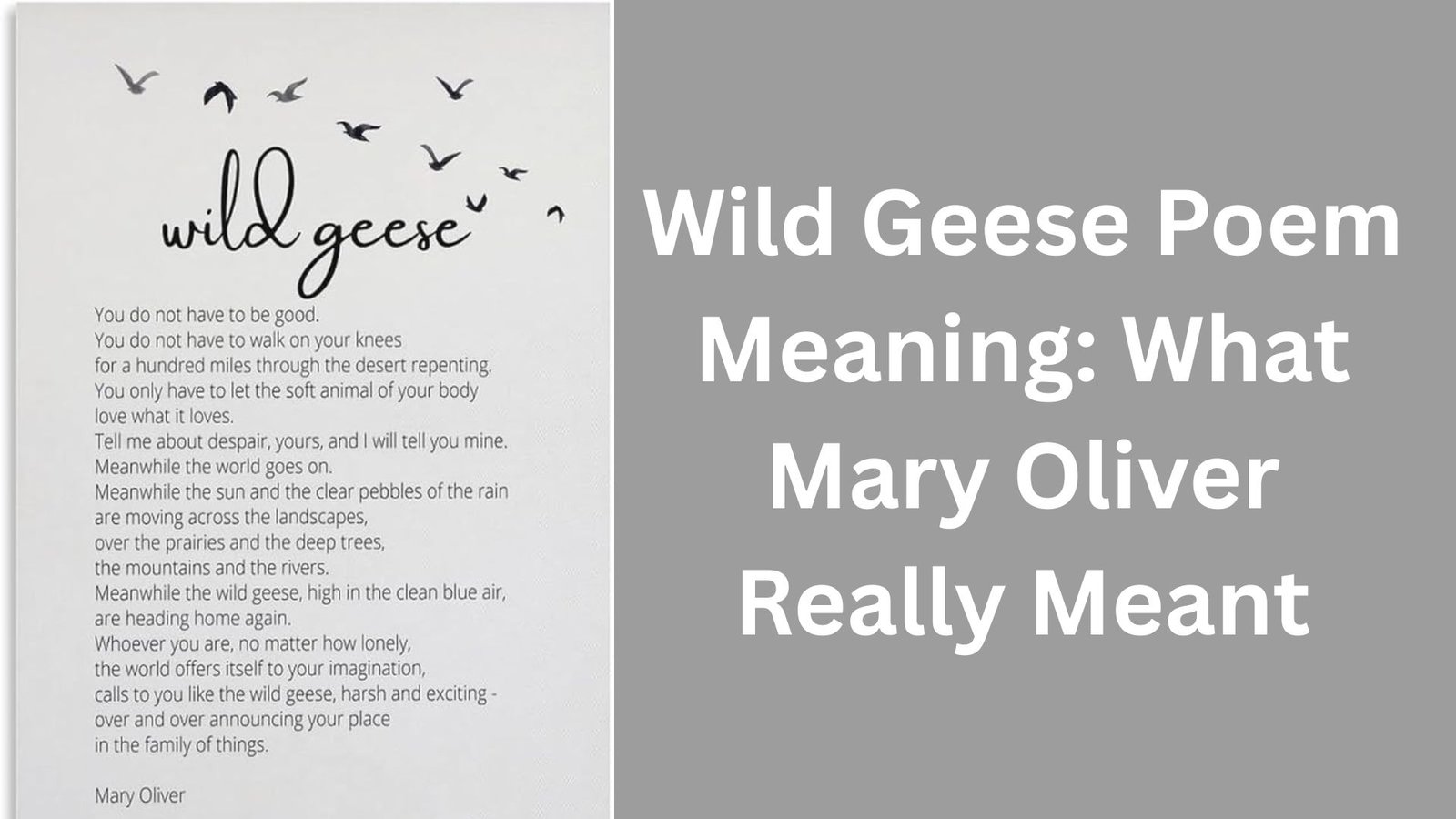
Wild Geese Poem Meaning
I’m going to break down the five main themes in “Wild Geese.” Each one builds on the last. Together, they create Oliver’s message about self-acceptance and belonging. Let’s look at what she’s really saying.
1. Letting Go of Moral Perfectionism
“You do not have to be good.” That’s how Oliver starts. She’s not talking about being healthy or safe. She means you don’t have to meet some impossible moral standard. You don’t need to be perfect.
The poem pushes back against the guilt that society or religion loads onto you. Oliver mentions walking on your knees through the desert for miles, repenting. That’s religious imagery. It shows how pointless self-punishment really is. You don’t owe anyone that kind of suffering.
2. Acceptance of the Self
Oliver writes about “the soft animal of your body” and tells you to love what it loves. This line is about being honest with yourself. It’s about accepting your real feelings and wants without shame.
This isn’t permission to hurt people. It’s permission to stop lying to yourself. Oliver wants you to recognise what you actually feel. She wants you to stop pretending you’re someone you’re not. Your authentic self deserves respect.
3. Shared Human Experience of Pain
“Tell me about despair, yours, and I will tell you mine.” This line creates a connection. Oliver isn’t dismissing your pain. She’s meeting you in it. She’s saying your suffering matters and you’re not alone.
Pain can feel isolating. But Oliver shows that everyone carries despair. The conversational tone makes this feel like a real talk between friends. Your struggles don’t separate you from others. They connect you.
4. The “Meanwhile” Reminder
Oliver repeats “Meanwhile” twice in the poem, Here’s what that word does:
- It reminds you that life keeps moving while you suffer
- It tells you the world hasn’t stopped for your pain
- It shows that time passes whether you’re ready or not
The sun and rain don’t wait. The geese keep flying. This can feel harsh or healing, depending on what you need. Oliver shows you that nature continues its work while you figure out yours.
5. Belonging in the “Family of Things”
The final lines hit hard. “Whoever you are, no matter how lonely”, Oliver is talking directly to you. She says the world announces your place in it. You belong to the family of things.
Nature isn’t the answer to all your problems. But it gives you perspective. It reminds you that you’re part of something bigger. You don’t have to earn membership. You already have it, just by being alive.
Nature as a Guide: How Oliver Uses Natural Imagery
Oliver doesn’t just describe nature for decoration. She uses it to show you something about yourself. The natural world in this poem acts as a mirror. It reflects truths that are hard to see when you’re stuck in your own head.
The Role of Wild Geese
The wild geese aren’t random.
They represent specific things that matter to your understanding of the poem:
- Return and homecoming
- Natural direction without maps
- Communication between you and the world
The poem isn’t really about geese. It’s about how their call wakes something up inside you. When you hear geese flying overhead, you feel something. That feeling is what Oliver wants you to notice. It’s recognition. It’s remembering you belong somewhere.
Landscapes as Emotional Anchors
Oliver mentions prairies, mountains, rain, and rivers. These aren’t just pretty pictures. They show you a world that moves and breathes and continues. The landscapes ground the poem in something real and physical.
Nature doesn’t fix your suffering. I want to be clear about that. Oliver isn’t saying go outside and all your problems disappear. She’s saying nature gives you perspective. Your pain is real, but so is the rain. So are the mountains. You exist in the same world they do, and that connection matters.
Structure and Poetic Techniques That Shape Meaning
The way Oliver writes “Wild Geese” matters just as much as what she says. The structure itself teaches you something. I’ll show you how the poem’s form reinforces its message about freedom and belonging.
Free Verse Structure
Oliver doesn’t use rhyme schemes or strict meter. The poem has no constraints. That mirrors exactly what she’s telling you. You don’t have to follow rigid rules. You don’t have to fit into a predetermined shape.
The entire poem is one long stanza. No breaks. No divisions. This creates a feeling of continuity and flow. Your life isn’t divided into neat chapters. Oliver’s poem reflects that. It moves like a conversation or a stream of thought.
Repetition and Anaphora
“You do not have to…” Oliver repeats this phrase. Each time, she releases more pressure from your shoulders:
- You do not have to be good
- You do not have to walk on your knees
- You only have to let the soft animal of your body love what it loves
“Meanwhile” structures the middle of the poem. It appears twice and controls the pacing. This repetition (called anaphora) builds intimacy. It makes the poem feel like someone is talking directly to you, not at you.
Enjambment
Lines in this poem run over without stopping. You read one line, and it flows right into the next. No pause. Oliver does this on purpose. It mirrors two things: the unstoppable flow of life, and the natural movement of your thoughts and feelings.
This technique keeps you moving forward. Just like the geese flying. Just like time passing. Just like the rain and sun continue their work. You can’t stop between lines to overthink. You have to keep going.
Alliteration
Oliver uses sound patterns sparingly but effectively. “Heading home” is a clear example. The repeated “h” sound reinforces the idea of belonging and return.
The alliteration makes certain phrases stick in your memory. They sound right. They feel natural, like language you’d actually speak. That’s Oliver’s skill showing through without calling attention to itself.
Line-by-Line Insights Into the Poem
Let me walk you through the “Wild Geese” section by section. I’ll show you what Oliver is doing in each part. This breakdown will help you see how the poem builds from release to connection.
Opening Lines: Release From Obligation
The first lines hit you with permission you didn’t know you needed. Oliver tells you that you don’t have to be good. She means the crushing weight of moral perfection that society puts on you.
These opening lines address the pressure to constantly prove your worth:
- Religious guilt that says you’re never enough
- Social expectations that demand perfection
- The belief that you must suffer to earn peace
Oliver rejects all of it in just a few lines. She’s permitting you to stop.
Middle Lines: Shared Despair and Moving World
“Tell me about despair, yours, and I will tell you mine.” This is where Oliver meets you in your pain. She acknowledges that you’re hurting.
Meanwhile, the sun and rain continue. The world doesn’t stop for your suffering. This sounds harsh, but it’s actually comforting. Your pain is real and valid, but it’s also part of a bigger picture.
Final Lines: Universal Belonging
“The world offers itself to your imagination.” This line tells you that life is still calling to you. Despite everything, the world wants you to participate.
The “family of things” is Oliver’s final gift to you. You belong to this family just by existing. You’re already part of something bigger than your mistakes.
Conclusion
The Wild Geese Poem Meaning comes down to this: you don’t have to be perfect. Mary Oliver wants you to know that you belong in this world just as you are. Your mistakes don’t define you. Nature accepts you. The world needs you exactly as you are right now.
You came here looking for answers about this poem, and now you have them. Oliver’s message is simple but life-changing. You can let go of the guilt. You can stop trying to earn your place here. You already belong.
What lines from “Wild Geese” speak to you most? Drop a comment below and let me know. If this helped you understand the poem better, share it with someone who needs to hear Oliver’s message today. Sometimes we all need a reminder that we’re enough.
Frequently Asked Questions
What is the Wild Geese Poem Meaning?
The Wild Geese Poem Meaning centres on self-acceptance and belonging. Mary Oliver tells readers they don’t need to be perfect or punish themselves. You already have a place in the world just as you are. Nature accepts you without judgment, just like wild geese flying home.
What does “you do not have to be good” mean in Wild Geese?
This line means you don’t have to be perfect or meet impossible standards. Oliver says you can stop feeling guilty about your mistakes. You don’t need to earn your worth through suffering or constant self-improvement. Your existence alone is enough.
Why is the poem called Wild Geese?
The wild geese represent instinct and belonging. They don’t question their place in the world. They simply fly home. Oliver uses them to show that you also have a natural place here. You belong without needing to prove anything.
What does “the world offers itself to your imagination” mean?
This means the world is open and waiting for you. Despite your flaws, life still calls to you with possibilities. Nature doesn’t reject you. The world welcomes your participation and wants you to be part of it.
What is the main theme of Wild Geese by Mary Oliver?
The main theme is unconditional belonging. Oliver focuses on letting go of shame and accepting oneself. She connects human struggle with nature’s acceptance. The poem teaches that you’re part of the world’s family, just like every other living thing.